Get Full Government Meeting Transcripts, Videos, & Alerts Forever!
Get email alerts on the Elections topic
No spam. Unsubscribe anytime.
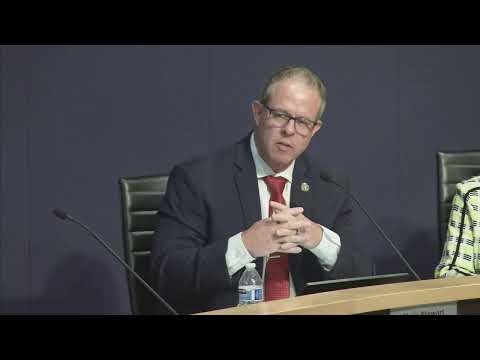
Board unanimously certifies Maricopa County canvas for Congressional District 7 special primary
Summary
The Maricopa County Board of Supervisors on a unanimous voice vote approved the county'level canvass of the July special primary for U.S. Congressional District 7 after receiving a detailed presentation from elections officials that reviewed turnout, ballot adjudication, hand counts and post-election audits.
The Maricopa County Board of Supervisors on a unanimous voice vote approved the county'level canvas of the July 15 special primary for Congressional District 7 after hearing a detailed presentation from Elections Director Scott Jarrett and Assistant County Manager for Elections Zach Shura.
The canvas certified county-level results for the rare special primary, a statutorily required step that sends Maricopa County'level returns to the Arizona Secretary of State for the statewide canvass. Elections staff told the board that Congressional District 7 spans most of southern Arizona but that just over 59,000 of the district's roughly 430,000 registered voters live in Maricopa County.
Elections director Scott Jarrett said Maricopa'county turnout for the district was about 12 percent and that the county counted roughly 14,075 ballots from its voters. "I would not bring a canvas before the board unless it was a clean audit report," Jarrett told the supervisors, summarizing post-election reconciliations and checks.
Why it matters: canvassing is the formal county certification step required by state law; it also records the post-election reconciliation work — signatures reviewed, provisional ballots cured, adjudications and hand counts — that underpins public confidence in results.
Key facts presented - Total ballots cast in CD7 (Maricopa portion): about 14,075. - Mode of return: 5,287 mail ballots (about 74% of county ballots), 1,251 drop-off early ballots (about 18%), 413 in-person election-day ballots (about 5.84%), four provisional ballots counted, and about 120 in-person early voters (about 1.7%). - Signature and cure: 43 ballots had signatures judged not to match the recorder's files and 13 envelopes had no signature; recorder staff contacted those voters during the cure period. - Adjudication and duplication: 158 ballots required adjudication (for example, write-ins or unreadable marks); some damaged or red-ink ballots were duplicated per established procedures and included in the canvas. - Hand counts and audits: state-prescribed hand counts were performed (Jarrett described a hand count of early ballots and two precinct central-count batches); partisan observers completed a hand-count sample that found zero variances; pre- and post-logic-and-accuracy tests were performed. - Reconciliations: Jarrett reported three early-ballot affidavit envelopes that arrived empty and described how chain-of-custody logs reconciled that variance.
Officials also described a post-election equipment check in which one tabulator used at a vote center did not accept ballots during post-test procedures. Jarrett said the county used a pre-tested spare tabulator for the legal post-test and hand-counted the four ballots that had been reported on the malfunctioning machine; the hand count matched the earlier tabulation.
Board action and procedure Madam Vice Chair Kate Brophy McGee moved to approve the canvas for item 102; Supervisor Stewart seconded. The board took a voice vote and the motion carried unanimously.
What board members asked and observed Supervisors praised poll workers and the elections training operation. Supervisor Lesko described attending poll-worker training, visiting vote centers and the central counting facility and said the experience reinforced her confidence in the chain-of-custody procedures. Jarrett walked the board through common post-election steps such as the cure period, adjudication and reconciliation between recorder and elections logs.
Next steps: the county-certified canvass will be sent to the Arizona Secretary of State, which will aggregate county canvasses into the statewide certification.
Ending note: Elections staff encouraged the public and board members to observe future testing and processing and pointed to maricopa.vote for educational resources and tours.