Get Full Government Meeting Transcripts, Videos, & Alerts Forever!
Get email alerts on the Municipal Budget topic
No spam. Unsubscribe anytime.
City manager and finance director present tight FY2026 budget; staff recommends holding millage near current level
Summary
City staff presented a proposed fiscal 2026 spending plan that holds the tax rate near current levels while relying on reserves and conservative revenue estimates; council members pressed for more detail on reserves and asked for a schedule showing impacts of different millage choices.
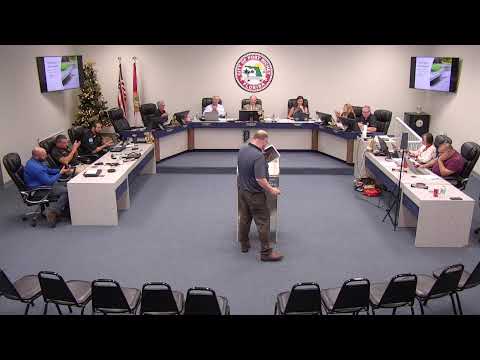
City Manager Andrew Butterfield and Finance Director Adam Thompson presented a proposed fiscal-year 2026 budget at a Sept. 2025 workshop, recommending the council keep the millage rate close to the current level while making targeted spending cuts and prioritizing capital requests. The presentation covered personnel costs, benefit estimates, enterprise fund changes and capital asks, and included recommendations for a tentative millage figure to be supplied at the council meeting.
The proposal matters because it sets the property tax baseline and frames which capital projects and staffing needs the city can afford without drawing heavily on reserves. Thompson told the council the budget was built on the rollback rate and that he had “put my recommendation in there that we keep it at 6.35.” He also said the budget is “very tight” but workable if the council provides guidance on any major changes.
Thompson said the draft relies on conservative revenue assumptions and several carry-forwards from grants and prior-year appropriations; he noted unknowns remain for employee health-insurance increases and some state-provided revenue numbers. He told the council he included a 17% estimate for benefits and had baked in modest contingency for workers’ compensation and liability increases. On the property-tax side, staff built the general-fund plan around the rollback rate and modeled a millage of 6.2975 in the spreadsheets; Thompson said that number can be adjusted if the council prefers a different tentative millage.
Council members pressed staff for a reserve schedule showing the cash-forward balances and the effect of alternative millage settings. Several members asked staff to produce a comparison that shows the financial difference if the council holds the rate, slightly lowers it, or raises it; Thompson agreed to present those figures at the budget meeting. The manager and finance director also said staff will bring more detailed line-item justifications at the upcoming departmental budget hearings so councilors can weigh capital vs. operating priorities.
Ending: Staff recommended the council adopt a tentative millage consistent with the rollback approach and directed departments to prepare capital justifications for the next meeting. Councilors asked for a reserve schedule and for a short memo that models the budget under several millage scenarios so they can evaluate trade-offs before adopting a final rate.