Get Full Government Meeting Transcripts, Videos, & Alerts Forever!
Get email alerts on the Environment Invasive Plants topic
No spam. Unsubscribe anytime.
Public hearing on invasive plants bill draws calls for bamboo ban and stronger enforcement
Summary
Bill 26‑25, a proposed county law to regulate invasive plants and ban the sale of invasive bamboo, drew mixed testimony at a July 22 public hearing; the County Executive’s office testified favorably but quarry, agricultural and some property‑owner representatives urged narrower requirements or exemptions.
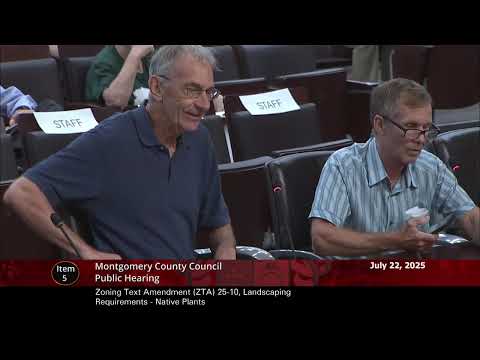
Bill 26‑25, a county bill to regulate invasive vegetation and prohibit the sale of invasive bamboo, was the subject of a public hearing on July 22, 2025. Testimony came from county officials, neighborhood residents, conservation groups, property‑owner representatives and business interests; a Transportation and Environment committee work session is scheduled for Oct. 6, 2025.
What the bill would do: The draft bill would (1) broaden the county code’s treatment of weeds to distinguish non‑native invasive plants, (2) exempt native species from the weed‑removal requirement, (3) prohibit sale of invasive bamboo in the county, and (4) provide penalties for violations. The bill would also create enforcement mechanisms to address invasive species on private and public lands and allow the county to adopt lists of prohibited species.
County position and support: Ken Hartman Espada, assistant chief administrative officer, testified on behalf of the County Executive in favor of the bill and said county departments provided operational feedback to address enforcement and clarity. Conservation groups and watershed organizations testified in support and urged stronger language, funding for removals and a public‑education campaign.
Concerns from property owners and businesses: Several private property owners and business representatives urged caution about the bill’s scope and cost. Representatives of Montgomery County Farm Bureau and local quarry operators said the bill as drafted could impose significant burdens on property owners—particularly agricultural and quarry properties—if removal buffers are large or if a 15‑foot removal zone along property lines is enforced. Attorneys representing quarry owners asked for agricultural and quarry exemptions, or for the 15‑foot setback requirement to be pared back to a narrower access band. Other speakers urged funding or grant programs to help homeowners and recommended requiring root barriers where bamboo exists.
Notable proposals from the public: Testimony included requests to add invasive species like Japanese knotweed explicitly to the prohibited list; calls for creating county-funded removal grants; formation of a bamboo‑specific eradication subgroup within the county’s Weed Warriors program; and an underground barrier requirement for containment (University of Maryland Extension’s recommended 3‑foot depth barrier with 6‑inch aboveground cap was cited).
Next steps and deadlines: The public hearing closed on July 22. The Transportation and Environment Committee will consider the bill in a work session on Oct. 6, 2025. Written materials for council consideration are due by Sept. 29, 2025. No final vote was taken at the hearing.