Get Full Government Meeting Transcripts, Videos, & Alerts Forever!
Get email alerts on the Budget Finance topic
No spam. Unsubscribe anytime.
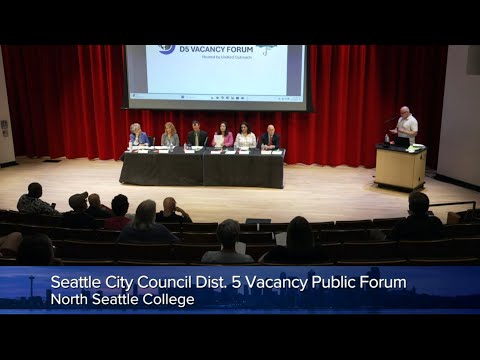
District 5 candidates acknowledge Seattle''s $240–250M shortfall, express support for progressive revenue with focus on priorities
Summary
Candidates agreed the city faces a large budget shortfall and many cited progressive revenue (including a business and occupation-style tax) alongside spending priorities — public safety, housing and core district services — though none committed to a single package without mayoral budget details.
Candidates at the forum acknowledged Seattle faces a large near‑term budget gap and discussed where to prioritize spending and which revenue tools to consider.
Deborah Juarez and others said the council must wait for the mayor’s proposed budget to see line items, but Juarez and Jim Voorhe both indicated they favor progressive revenues such as an occupational or B&O‑style tax. Voorhe said his decades of municipal budgeting experience would help him evaluate tradeoffs; Nilu Jenks and Katie Imo emphasized protecting libraries, civic education and core services while exploring progressive revenues and anti‑speculation ideas.
Why it matters: The city needs to close a multi‑hundred‑million dollar gap while maintaining services widely considered essential — housing programs, libraries, public safety and parks — and choices will affect taxes, services and capital projects across the city.
Details and framing • Juarez cited a figure of a $240M–$250M deficit, and said a proposed B&O (business & occupation-style) tax with a four‑year sunset could go to voters to fund addiction and treatment services. • Jim Voorhe said he supports progressive revenue tools in principle but would want to review the specifics when the mayor submits a budget. • Candidates emphasized reserves, planning for revenue volatility, and protecting service lines that most affect daily life, such as sidewalks, transit and community centers.
Candidates framed the challenge as a balancing act: protect essential services for constituents, seek progressive revenue where feasible, and avoid short‑term cuts that would worsen long‑term costs.