Get Full Government Meeting Transcripts, Videos, & Alerts Forever!
Get email alerts on the Data Centers topic
No spam. Unsubscribe anytime.
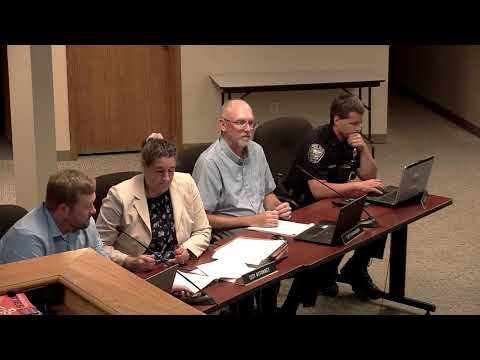
Cannon Falls planning commission recommends conditional-use rules for proposed data centers
Summary
Cannon Falls planning commissioners on July 21 recommended that City Council adopt a zoning text amendment to allow data centers as a conditional use in the I-2 (industrial) district, while adding staff-recommended clarifications and regulatory references.
Cannon Falls planning commissioners on July 21 recommended that the City Council adopt a zoning text amendment to allow data centers as a conditional use in the I-2 (industrial) district, while adding staff-recommended clarifications and regulatory references. The commission made the recommendation after a work-session discussion and a public-hearing period with no public speakers.
The amendment would bring data centers explicitly into the city code as a use eligible for a conditional‑use permit, with staff edits added to clarify oversight bodies and correct typographical errors. “Data centers do need to be brought into existence within our city code,” Staff member Shelly said during the introduction to the hearing. Shelly later told the commission the recommended edits would add the Public Utility Commission to lists of oversight or consultation bodies and correct a subdivision cross‑reference.
Why it matters: zoning language shapes what uses a city can authorize, and labeling a use as a conditional use gives city government a mechanism to attach site‑specific conditions. Commissioners repeatedly emphasized that adopting a conditional‑use framework preserves local discretion to require conditions or deny particular proposals at the conditional‑use review stage.
The commission discussed whether to add explicit prohibitions—for example on cryptocurrency (“crypto”) mining—during the hearing. Commissioners heard from staff and legal counsel that the conditional‑use process and the ordinance’s review criteria provide pathways to evaluate and decline uses found to be detrimental once a specific site application is filed. “If it were evaluated and came to identify that the use was detrimental, the city may have the opportunity to address it,” Shelly said, citing the conditional‑use criteria in the draft language.
The commission motioned to recommend that the City Council pass the ordinance with staff’s recommended amendments. The motion to recommend approval was moved and seconded from the dais and passed on a voice vote; the public record shows a majority voice vote in favor and no recorded no votes.
Discussion details and limits: commissioners stressed that the draft is not intended to be static and that the definition of “data center” may change over time as technologies and business models evolve. Several commissioners asked that the council retain the ability to reexamine the ordinance and to attach conditions at the conditional‑use permit stage. Staff advised that enforcement and regulation of specific technical aspects—such as electricity use, water use or specific equipment—may also involve state or federal agencies and that adding the Public Utility Commission as an oversight reference clarifies that state‑level regulation will be relevant.
Next steps: the planning commission forwarded its recommendation, with staff edits, to the City Council for final action. The council will consider the commission’s recommendation and may adopt, modify, or return the language for further revision. No public comments were received during the commission’s public‑hearing period on the text amendment.
Ending note: the commission’s recommendation establishes a local process for evaluating data‑center proposals under the city’s conditional‑use framework; specific project approvals would occur later when applicants submit site‑specific conditional‑use permit applications.