Get Full Government Meeting Transcripts, Videos, & Alerts Forever!
Get email alerts on the School Finance topic
No spam. Unsubscribe anytime.
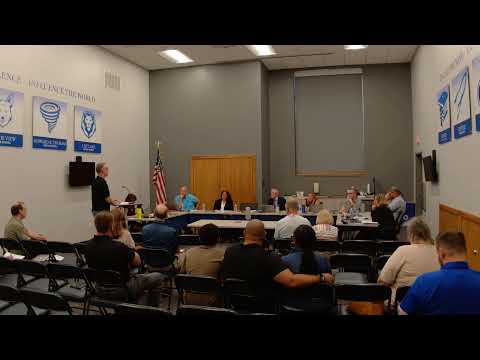
Residents Ask Questions About District Budgeting; Auditor Outlines Audit Scope and State Requirements
Summary
Public commenters pressed the board for clarity on spending and fund classification; the district’s finance lead and external audit partner reviewed the budget timeline, audit schedule and state fund-balance guidance.
Several residents asked the board to explain recent capital spending and budget classification, and the district’s finance lead and external audit partner responded with a timeline and an overview of audit scope and state requirements.
Public comments: a resident who identified as PK raised line-item questions about the district’s FY24–25 budgeting and capital spending, saying the district’s 2024–25 budget planned about $10 million for capital outlays but that “over 90% of those capital outlays were planned to be spent...from fund 20, which is the O and M fund,” and asked whether that classification complied with state regulations. Another commenter, Jean Meyer, raised concerns about transparency around recent principal hires and materials shared with parents.
District response and auditor overview: Dana (district finance staff) walked the board through the annual budget-development calendar, noting spring tax-notice timing, April–May budget development with principals, the role of the facilities committee and that the tentative budget will post in August with final approval in September (the district levy timeline follows and final levy is due in December). Dana said the audit fieldwork is scheduled to begin the week of Aug. 18.
Audit partner Sheridan Jurgensen (auditing firm Assisian) summarized audit activities including evaluation of internal controls, review of interfund transfers (to ensure proper board approval and compliance with state rules), federal grant compliance testing and fund-balance analysis. Jurgensen said Illinois guidance limits maintaining a fund balance greater than 2.5 times annual expenditures in certain funds and advised boards to consider both minimum and maximum reserve levels when planning capital work. She said the auditors have found no significant internal-control findings in recent audits and that the audit team is available to meet with board members during fieldwork.
Why it matters: commenters raised questions about whether capital spending was routed through the capital-projects fund (Fund 60) versus operations and maintenance (Fund 20) and whether large projects (including a proposed high-school stadium/track renovation estimated in public comment at about $8,000,000) ought to be funded differently given other district needs such as staffing and classroom space.
Discussion versus decision: no board action altered the budget at the meeting. Dana noted that some capital projects are multi-year and that pay requests spanning the fiscal-year boundary complicate year-by-year categorization of expenditures. The board asked administrators and the auditors to provide documentation answering the public’s questions about fund classifications, recent project funding and the auditing timeline.
Next steps: Dana said the auditors will present findings after fieldwork and the district will provide budget documents, fund-transfer records and grant documentation to answer the public’s questions; the board indicated it expects those materials before or during the September budget adoption process required by state law.