Get Full Government Meeting Transcripts, Videos, & Alerts Forever!
Get email alerts on the Land Use Infrastructure topic
No spam. Unsubscribe anytime.
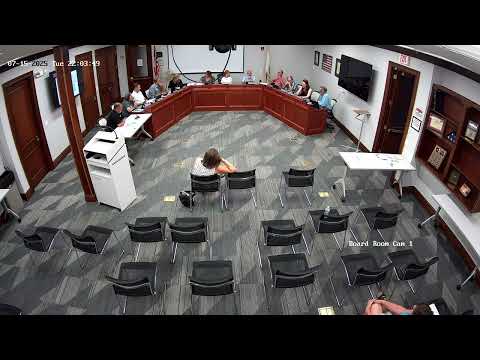
Commission debates keeping ‘town center’ in comp plan amid sewer, water limits
Summary
Commission members discussed whether to retain a town center designation in the village comprehensive plan after members said the area lacks municipal water and sewer capacity, while others said off‑site or district solutions could enable future mixed‑use development.
Commission members debated whether to keep a “town center” designation in the village comprehensive plan, citing limited local water and sewer capacity but differing on whether those limits make mixed‑use development impossible.
The discussion turned on infrastructure and on how the plan should describe the area’s development potential. Speaker 1, a commission member, said the plan should note constraints, adding, “this area is currently agricultural and without basic infrastructure.” The same speaker also noted the comp plan’s policy on municipal services: “we state very clearly in the comp plan that this village does not contemplate nor advocate ever to have its own municipal water or sewer.”
Why it matters: the town center designation shapes future zoning and development expectations in an area some speakers described as largely agricultural. One speaker raised an example of a large proposed project in the region, saying the Mill Creek sanitary district would need to expand both sewer and water to serve a roughly 900‑unit development, a point used to illustrate capacity limits under current systems.
Speakers agreed the physical lack of nearby mains or treatment capacity is a constraint in the immediate area, and several noted that the document’s language now flags that limitation. One commissioner (Speaker 2) urged staff review to confirm that the comp plan and town center plan contain clear statements about infrastructure limits and the area’s semi‑rural character.
Not all members treated capacity as an absolute bar to development. Speaker 3 argued alternatives exist, saying that even where a local sanitary district lacks capacity, “there are other ways to address these issues without using Roscoe sanitary,” and cited examples of developments that rely on hauled waste or alternative service arrangements. Another commissioner noted that capacity could exist elsewhere in the broader service area — for example, Mill Creek sanitary district expanding service to accommodate larger projects — meaning a town center concept could remain on the books even if not immediately buildable in place.
The conversation also touched on land‑use outcomes. Several members favored clearer conservation‑design language in the plan to guide the character of any future development and to protect agricultural parcels where possible. Speaker 3 said preservation programs or conservation design could be used if the community wants to retain large agricultural spaces, but added that demographic and market trends may pressure farmland to develop over time.
No formal motions or votes were taken during the discussion. The exchange was recorded as a policy‑level discussion about how the comprehensive plan should describe development potential, infrastructure limitations, and design expectations for the town center area. Several commissioners asked staff or named colleagues to verify that the comp plan and the town center plan text include explicit infrastructure caveats and conservation design guidance.