Committee approves budget assumptions, adopts 5% utility increase; health-insurance change fails
Loading...
Summary
The committee voted to forward 2026 budget assumptions to the full board after adopting a 5 percent placeholder for utility-cost increases and rejecting a motion to lower the health-insurance budget assumption from 6.5 percent to 3.4 percent.
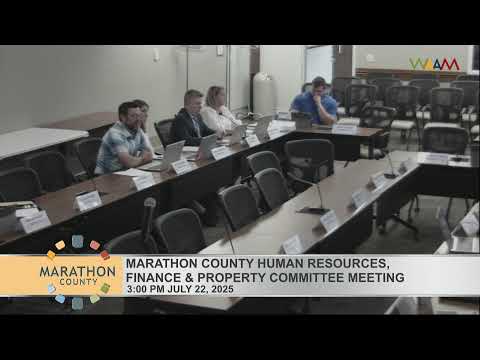
The Marathon County Human Resources, Finance and Property Committee voted to forward its 2026 budget assumptions to the full board after debate over wages, health insurance and utility-cost assumptions.
Key votes and guidance: the committee adopted a 5 percent estimate for utility-cost increases for budget planning and rejected a motion to lower the health-insurance expenditure assumption from 6.5 percent to 3.4 percent. Chair Gibbs moved the final set of assumptions to the full board and the committee approved the motion with a majority vote.
What the assumptions mean: staff will use the adopted assumptions as starting points for the 2026 budget development. The 6.5 percent health-insurance assumption is the preliminary budgeting line item; the committee directed administration to explore plan design and other measures to limit levy impact. Committee language also directs staff to seek non-levy revenue sources where available and to consider market conditions when setting wage recommendations.
Utility and facilities context: Facilities and energy staff told the committee the county currently spends roughly $60,000 per year to maintain a set of vacant buildings (utility and holding costs) and that completing divestment or sale of those properties could reduce that annual expense. Facilities Director Chris described multiple energy-efficiency measures already in place or planned (lighting controls and LED conversions, variable-frequency drives, heat-recovery systems, building-automation scheduling, and other measures). He and other staff warned the committee that the new Forensic Science Center coming online will affect the county's utility footprint and that staff are still assembling operating-cost estimates for that facility.
Health insurance and compensation: Committee members discussed health insurance cost drivers and benefit design. Vice Chair Marshall raised the city/county split and said the committee should look at contributions and plan provisions to limit levy impact; other members noted competing pressures to retain staff amid market wage pressures. Administration said it is conducting or will use a market wage study to guide compensation decisions and that final policy choices on health benefit design will be a joint, board-level decision. The motion to reduce the health-insurance assumption to 3.4 percent failed on a committee roll-call.
Process and next steps: administration will proceed with budget development using the committee's adopted assumptions, returning detailed options and any late changes (for example, final insurance renewal rates or final utility-rate proposals) during the budget-formation process. The committee also requested additional detail on department-level utility usage and proposed energy-efficiency investments.