
Upson County adopts technology-overlay zoning changes to encourage tech businesses
Get AI-powered insights, summaries, and transcripts
Sign Up Free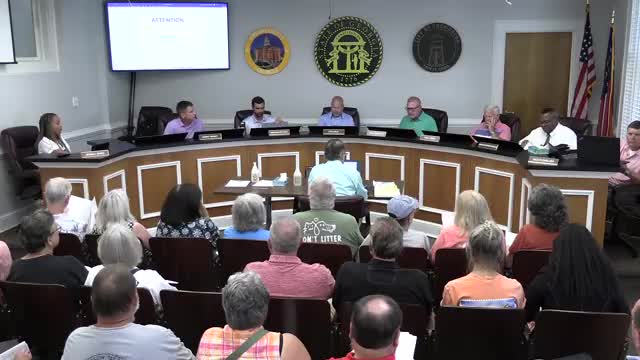
Summary
The Upson County Board of Commissioners adopted an ordinance revising M-1/M-2 zoning and creating a technology overlay district to allow technology-related uses and to give county and the IDA a recruitment tool for large industrial and technology employers.
The Upson County Board of Commissioners voted to adopt a zoning text amendment to rename and revise M-1 and M-2 industrial districts and to create a technology overlay district, the board announced during its public meeting. The measure, presented by planning staff, changes definitions, adds technology-related uses to the permitted lists for the M-1 and M-2 districts and establishes standards for a technology overlay district that can be applied over other zoning (such as AR parcels) to allow tech uses on larger tracts. County planner/assistant described how the change grew out of a request from the Industrial Development Authority. Slade Gulledge, executive director of the IDA, and County Manager Tinsley explained the idea to the Planning Commission, which unanimously recommended approval at its June 9 meeting, the planner said. The ordinance was presented at a public hearing before the commission and adopted after a motion to approve carried. The overlay is drafted so it will automatically include the amended M-1 and M-2 language on IDA property while allowing overlay designation for large parcels in other zones; staff cited “two specific parcels” of contiguous acreage as examples where the overlay would permit technology development without removing existing AR uses. The ordinance text submitted to the board includes: a definition of “data center,” amended names for M-1 and M-2 to better reflect industrial and technology uses, a list of permitted uses for the overlay district, development and design standards, and administrative and enforcement language. Action: Commissioner Watson moved to approve the ordinance; the motion received a second and the board recorded aye votes and adopted the ordinance. The board did not adopt any additional funding, designations or incentive packages as part of the ordinance; staff said the overlay is intended as a regulatory tool to be paired with future recruitment efforts by the IDA. Why it matters: The change creates a zoning pathway to site technology-related businesses on both existing industrial land and on larger agricultural parcels where an overlay is approved, giving county and economic development leaders an additional option when they market sites to potential employers. Next steps noted by staff included administrative steps to finalize ordinance language and to coordinate with the IDA on potential parcels that could receive overlay designation.