Get Full Government Meeting Transcripts, Videos, & Alerts Forever!
Get email alerts on the Water Hydrology topic
No spam. Unsubscribe anytime.
State Water Board: statewide hydrology near average; term 91 curtailments in effect
Summary
Board staff reported July 16 that statewide precipitation and reservoir storage are near long‑term averages, while term 91 curtailments in the Bay‑Delta watershed went into effect in late June; staff flagged monitoring needs and firefighting exceptions.
State Water Resources Control Board Chair Joaquin Esquivel convened a July 16 session that included a hydrologic update and an overview of term 91 curtailments affecting the Bay‑Delta watershed. Jessica Bean, a staff member with the Board’s Division of Water Rights, told the board, "Precipitation statewide is looking, pretty similar to where we were, last month when we met — right about 95% of average statewide." A Water Board staff member who presented on term 91 said, "term 91 is a water rights term that is included in permits and licenses, granted after 1965 in the Bay‑Delta Watershed."
The update matters because term 91 is a tool the State Water Board uses when the Delta is in a "balanced condition" and stored project water must be released to meet Bay‑Delta Plan flow and quality requirements. The staff presenter described term 91 as protecting stored project water by notifying permit and license holders that water is not available at their priority when supplemental project water is being used to meet Delta needs.
Board staff laid out the current statewide picture. Bean reported regional departures from average precipitation for the water year: Northern Sierra about 105% of average, the San Joaquin Index at about 67%, and Tulare at about 82%. Staff said major storage reservoirs are at or near average; the presentation summarized statewide storage as about 110% of average. On two Northern California rivers where temporary curtailments can apply, staff said Shasta River curtailments began June 27 and flows have been near the emergency minimum (about 50 cubic feet per second, CFS); staff reported the Shasta River at roughly 55 CFS on the morning of July 15. The Scott River still had curtailments suspended at the time of the presentation, with reported morning flows around 89 CFS but dropping toward minimum thresholds that decrease to 30 CFS in August.
On term 91 specifically, staff said the program applies to permits and licenses issued after 1965 in the Bay‑Delta watershed. They reported that the “face value” of term 91 rights in the Delta watershed totals about 3,000,000 acre‑feet and that “the total demand curtailed in a typical summer curtailment period is about a 100,000 acre‑feet.” Staff confirmed the term 91 web posting is updated weekly and that term 91 curtailments went into effect for this year on June 20 after sustained rising supplemental project water. The presenter said the posting shows when supplemental project water is positive (indicating project storage releases are needed) and when it is negative (natural flows meet Delta requirements).
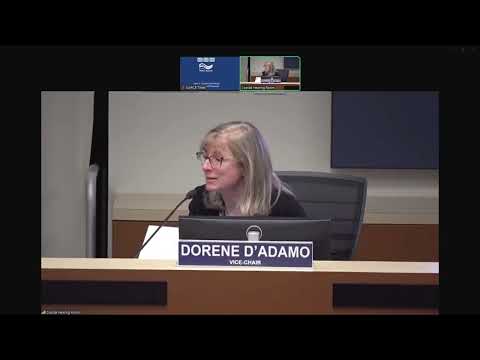
Board members asked operational questions. Vice Chair Doreen D’Adamo and member Laurel Firestone questioned how often right‑holders inquire when notices are posted and whether enforcement has been necessary; staff said right‑holders typically monitor the Board’s updates and that the enforcement unit has previously looked at term 91 cases but reported general compliance. Staff also reminded the board that human‑health and safety exemptions apply: diversions for firefighting and maintenance of firefighting water supplies are excepted from curtailment. As an example, staff cited the 2024 Shelley Fire, when curtailments in the Scott River were delayed and reporting deadlines extended.
Board members did not take formal action; staff said they will continue monitoring hydrology, fish presence (staff reported Chinook and Coho in both Shasta and Scott systems as of July 8), and the web posting that tracks supplemental project water. No vote or regulatory change was proposed.
Speakers relevant to this article - Joaquin Esquivel, Chair, State Water Resources Control Board (government) - Jessica Bean, Division of Water Rights staff, State Water Board (government) - Staff member, Division of Water Rights (role not named in transcript) (government) - Doreen D’Adamo, Vice Chair, State Water Resources Control Board (government) - Laurel Firestone, Board Member, State Water Resources Control Board (government) - Nicole Morgan, Board Member, State Water Resources Control Board (government) - Sean Maguire, Board Member, State Water Resources Control Board (government)
Authorities - type: policy; name/description: Bay‑Delta Plan; referenced_by: ["hydrologic update","term 91 explanation"] - type: policy; name/description: Term 91 (water‑rights term in permits/licenses issued after 1965 in the Bay‑Delta watershed); referenced_by: ["term 91 explanation"]
Actions []
discussion_decision {"discussion_points":["Statewide precipitation and reservoir storage are near long‑term averages; regional variation exists (Northern Sierra above average, San Joaquin below).","Curtailments: Shasta River curtailments began June 27; flows hovering near 50 CFS; Scott River curtailments suspended but flows falling toward thresholds that drop to 30 CFS in August.","Term 91 governs post‑1965 permits/licenses in the Bay‑Delta watershed and is triggered when supplemental project water is needed to meet Delta flow/water‑quality obligations."],"directions":["Staff will continue to monitor Shasta and Scott rivers and publish weekly term 91 supplemental project water updates on the Board website.","Staff will note and apply human‑health and safety exceptions for firefighting and maintenance of firefighting water supplies when warranted."],"decisions":[]}