Get Full Government Meeting Transcripts, Videos, & Alerts Forever!
Get email alerts on the Public Safety Police Funding topic
No spam. Unsubscribe anytime.
Central committee reviews four policing models, asks sheriff for hybrid cost by Aug. 26
Summary
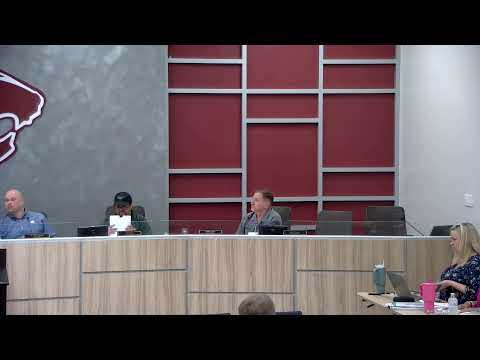
A City of Central committee on public safety spent the Aug. 6 meeting reviewing four policing scenarios for the city and voted to request that the East Baton Rouge sheriff's office provide a combined cost for a hybrid arrangement by Aug. 26.
A City of Central committee on public safety spent the bulk of its Aug. 6 meeting reviewing four policing scenarios for the city and voted to request that the East Baton Rouge Sheriff's Office provide a cost for a hybrid arrangement by Aug. 26.
The committee discussed: a fully independent Central Police Department (CPD) ("version 1"); a full takeover by the sheriff's office (the 2.515 million figure discussed by the parties); slimmer hybrid models that would leave some functions with CPD while the sheriff covers major crime and dispatch (versions 2 and 3); and a status-quo or "hybrid/status quo" option that keeps current duties split between CPD and the sheriff (version 4). Councilwoman Wells moved that the committee seek a version that would make CPD the primary agency for traffic duties and the sheriff the primary agency for other policing; the motion was seconded and the committee recorded no opposition to asking for combined numbers by Aug. 26.
Why it matters: Committee members said traffic crashes and traffic-related workloads are the principal operational and budgetary stressors for the city. CPD and sheriff representatives presented six months of call-volume data and scenarios estimating start-up and recurring costs for a standalone department; the committee said it needs a clear, combined cost for a hybrid split of responsibilities before making a formal recommendation to city council.
The committee review
Chief (Central Police Department) and CPD staff presented four written "versions" of how policing in Central might be organized and funded. The presenter summarized each option and provided estimated budgets for the standalone CPD scenarios and partial-cost estimates for hybrids; the sheriff's portion of hybrid costs was not included in CPD's estimates because those numbers have not been negotiated, the presenter said.
Captain Kevin Devlin of the sheriff's office provided staffing and daily-lineup data for the Central substation and the Pride substation, showing typical day- and night-shift deputy counts and explaining how the CAD (computer-aided dispatch) coding can affect counts (for example: hit-and-run versus crash versus damaged property). Devlin said deputies at Central and Pride typically produce about 110 written reports in a busy month even when total calls for service are larger; he also flagged the sheriff's department's staffing constraints and noted the sheriff previously priced a full takeover at roughly $2.515 million, saying that number assumed the sheriff absorbing all duties now performed by CPD.
"The 2.515 was from the aspect of the sheriff thinking over everything," Captain Kevin Devlin said when asked to explain the figure.
CPD budget and grant notes
The committee heard that CPD's current budget was discussed as roughly $1.2 million in materials presented by the department; combined with the sheriff's previously cited 2.515 million figure, committee members observed a potential combined cost near $3.7 million if both agencies' full budgets were counted. CPD staff also reported that the city recently received a UEI/case number, allowing the city to apply for federal grants; the presenter said COPS grants can cover a share of salaries for new hires for a limited period but that deadlines and the exact percentage vary and require further review.
"Miss Lewis did do all that," a committee member confirmed of the CPD statistics and packet materials provided to the group (data printouts and an explanatory packet were circulated to members).
Operational concerns: crashes and coverage
Much of the committee's discussion centered on who would handle traffic crashes and how many additional calls the sheriff would absorb if CPD were dissolved or significantly reduced. Committee members and sheriff staff repeatedly noted that traffic-crash investigations are time-consuming and that the sheriff would need to absorb hundreds of additional incidents per month if CPD's traffic and crash work transferred to the sheriff without added deputies.
Using CPD and sheriff monthly CAD extracts, participants highlighted that total calls for service do not equal written reports: one presenter said an example month showed roughly 525 calls with about 110 reports needing formal documentation. The sheriff's representative estimated that, after removing certain categories such as business checks or other non-fixed duties, the sheriff's workload would rise by an estimated 10—% to 33% in some scenarios depending on what CPD continued to handle.
Committee direction and next steps
After extended discussion, Councilwoman Wells moved that the committee request a hybrid scenario for the Aug. 26 meeting in which CPD's primary role would focus on traffic duties (including crash investigation and traffic enforcement) and the sheriff's office would be the primary agency for other criminal and major-incident responses. The motion was seconded and the committee recorded no opposition to asking for a combined cost package from the sheriff and the CPD for that hybrid model by Aug. 26.
Mayor (name not specified) described the need for a joint package and said he would not sign any long-term agreement without seeing the combined numbers. "I am not comfortable with entering into an agreement until I see what we're gonna do," the mayor said.
The committee also agreed to prepare a single packet (the CPD presenter offered to assemble it) that the city council can review; the committee's role is to formulate a recommendation to the council, not to finalize any contract. Committee members stressed that any final arrangement would be a council decision.
Other procedural actions
- The committee approved the minutes from its previous meeting (motion seconded by Captain Dimlin). No roll-call vote count was recorded in the transcript; the chair declared the minutes accepted. - The committee asked staff to assemble and circulate a packet summarizing the four versions and the data discussed. - The committee set a target date of Aug. 26 for the sheriff and CPD to present a combined cost for a hybrid model; members asked that both agencies attempt to provide that number for the next meeting.
What the committee did not decide
The meeting produced no final recommendation to the council on which model to adopt. Several members said the data presented so far helps narrow the issues, but the sheriff's precise price for a hybrid (or for absorbing all policing duties) remains the key unresolved item. The mayor and committee members said they want the sheriff and the CPD to negotiate and provide a reconciled number and an explanation of what functions each agency would retain under a hybrid split before the council votes.
Ending
The committee adjourned after confirming the Aug. 26 target for a joint cost presentation. Members reiterated that the committee's purpose is to digest operational data, identify questions for the two agencies, and make a clear recommendation to the City Council once both cost and operational responsibilities are known.