Get Full Government Meeting Transcripts, Videos, & Alerts Forever!
Get email alerts on the Healthcare Acquisition Compliance topic
No spam. Unsubscribe anytime.
Independent monitor finds most acquisition covenants met but flags advisory-board role and capital shortfalls at Wyoming Medical Center
Summary
An independent monitorship commissioned by the Natrona Collective Health Trust found 13 of 17 post‑sale covenants for Banner’s 2020 acquisition of Wyoming Medical Center were met for 2024, but cited weaknesses in the advisory board’s community input role and a capital‑spending shortfall versus contractual milestones.
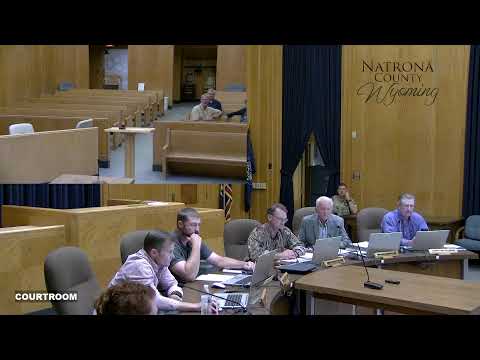
The Natrona Collective Health Trust presented an independent monitorship report to the Natrona County Board of Commissioners that found most contractual commitments tied to Banner Health’s 2020 purchase of Wyoming Medical Center were met for 2024, but that the hospital’s Wyoming advisory board and capital‑expenditure reporting fell short of the acquisition agreement’s intent.
"The Natrona Collective Health Trust is dedicated to improving the health and well‑being of the residents in Natrona County," said Eric Nelson, chairman of the trust, as he introduced the PYA monitoring team.
PYA, a national healthcare consulting firm retained by the trust, said it reviewed the 2020 transaction covenants and assessed Banner’s compliance for calendar year 2024. PYA said it mapped 17 covenants into roughly 74 discrete verification elements and concluded 13 covenants were met and 4 were partially met. The monitorship included site visits, document review and about 25 interviews with community members, clinicians, Banner personnel and advisory‑board members.
"We found that the baseline versus that 2024, those essential services have been maintained," said Leanne Odom, one of PYA’s lead reviewers, summarizing the monitorship’s assessment of the agreement’s "maintaining essential services" covenant. PYA said it examined service scope and intensity across the 15 listed essential services and reviewed metrics such as transfer logs and appointment‑wait data.
The monitorship singled out two areas as partially met. First, PYA found the Wyoming advisory board existed and met in 2024, but that the contract’s expectation of "active listening" and demonstrable incorporation of community input into strategic planning, clinical growth and quality‑improvement decisions was not satisfied. PYA said the advisory‑board covenant also feeds other covenants, including those on clinical expansion and quality best‑practice sharing, amplifying the effect of shortcomings in that body.
Second, on capital commitments, PYA reported Banner did not meet the $30,000,000 disbursement milestone by the end of 2023 specified in the post‑closing documents. PYA verified $17,800,000 in actual disbursements through 2023 and said Banner had allocated about $40,000,000 through 2024, which included roughly $16,000,000 allocated but not yet dispersed. The transaction schedule PYA cited sets subsequent milestones at $60,000,000 by 2026 and $100,000,000 by 2030.
"When you're spending that much capital in a short amount of time, there's actually spending money, which money is out the door, you're writing checks. And then there's money that has been allocated," said Lance Porter, chief executive officer of Banner Wyoming Medical Center, explaining why allocation and cash disbursements can differ for multi‑year renovation projects. Porter said Banner had approved or spent roughly $75,000,000 in projects when combining cash and allocations and described ongoing multi‑year renovations such as a near‑$20,000,000 upgrade to patient floors and a $7,300,000 electrophysiology lab.
Commissioners and public commenters pressed Banner and the trust on whether allocated funds should be treated as meeting the covenant milestones. PYA and trust leadership said some allowable categories (physician recruitment, telehealth, ambulatory growth) have not historically been captured in the annual reports and recommended improved reporting to ensure eligible expenditures are counted.
Multiple county commissioners and a group of concerned citizens who submitted a July 16 letter urged stronger accountability. The letter asked the commission to require hospital‑level verified financial reporting, demand a public corrective plan with quarterly progress reports for unmet capital obligations, revitalize the Wyoming advisory board with clearer structure and accountability, publish comparative public‑health metrics and consider a county‑led review of future annual reports.
Tom Swanson, speaking for a community group, told commissioners that recruitment and specialty expansion remained inconsistent and lacking transparency and listed specialties where shortages persist.
Trust and Banner responses and next steps: Eric Nelson and Beth Worthen, CEO of the Natrona Collective Health Trust, said the trust will work more proactively on advisory‑board nominations and on collaboration with Banner. The trust confirmed PYA will continue as the independent monitor for a three‑year engagement and said it will use PYA’s findings to guide an action plan. Banner leaders said they had already altered advisory‑board procedures, would improve reporting on capital allocations and work with trust and region‑level finance leaders to provide more transparent quarterly updates; they asked the commission to consider the practical differences between allocated (committed) funds and cash disbursements on multi‑year construction and recruitment projects.
No formal county action or vote on enforcement measures was recorded during the meeting; commissioners discussed options including an independent county monitor and noted limits in the county’s contractual authority. Commissioners urged the trust to provide written follow‑up and the monitor to continue reporting annually over the engagement period.
Why it matters: The advisory board and capital‑expenditure commitments are central to how the transaction agreement was meant to preserve local services, shape strategic growth and enable community input. The monitorship shows most covenants were met for 2024, but the partially met items are tied to accountability, public involvement and documentation of investments — issues commissioners and residents said affect confidence in local health‑care delivery.
The trust and Banner said they would pursue corrective steps and broader transparency; PYA will return as part of the retained monitorship to assess progress in coming years.