Get Full Government Meeting Transcripts, Videos, & Alerts Forever!
Get email alerts on the Emergency Medical Equipment topic
No spam. Unsubscribe anytime.
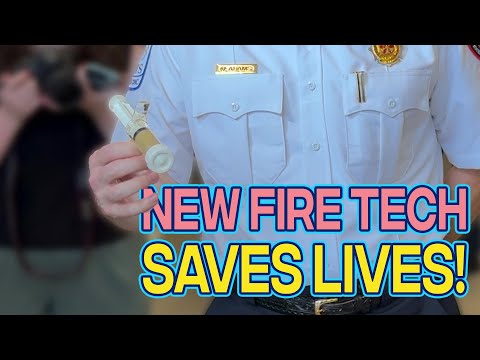
Crestlon says TraumaGel stopped severe bleeding on Cobb County firefighter during overhaul
Summary
Crestlon, the maker of TraumaGel, said the hemostatic product stopped a severe, non‑compressible hand bleed on a Cobb County firefighter, stabilizing him for transport after standard field measures failed.
Crestlon said its plant‑based hemostatic product, TraumaGel, stopped a severe, non‑compressible hand bleed on a Cobb County firefighter during overhaul operations, allowing the firefighter to be stabilized and transported for definitive care.
At a presentation in Cobb County, Joe Endelina, CEO and cofounder of Crestlon, described the incident and said the company recently received U.S. Food and Drug Administration clearance for the device “last August.” He said Crestlon has begun rolling the product out to major trauma and EMS systems across the United States and is active in “over 100 systems.”
Endelina said TraumaGel “is a plant based hemostatic medical device that controls traumatic external bleeding in seconds.” He told the audience the device was used after conventional measures — including digital pressure and packing with gauze — failed to stop the bleeding.
According to presenters, the firefighter fell through debris during overhaul at a defensive fire and received a severe laceration to a hand that “was non compressible to finger pressure.” The wound team initially attempted to control bleeding with shirts and 4‑by‑4s, Endelina said, and crew members noted the turnout gear was “coated in blood.” Crestlon and on‑scene personnel then applied TraumaGel; presenters said the application achieved rapid hemostasis and likely prevented loss of fingers or the hand.
Endelina recounted that an on‑scene engineer suggested trying the product. “We tried it, and sure enough, it stopped the bleeding,” he said. Presenters said the firefighter was later taken to a hospital and was recovering.
Crestlon provided context on field use: presenters said traditional wound packing requires taking a finger into the wound channel and then holding pressure for about three minutes to allow gauze to clot; they said TraumaGel can produce complete hemostasis within seconds without that prolonged direct pressure. Presenters also noted Cobb County’s ongoing prehospital blood transfusion program and described TraumaGel as an additional tool that can reduce the amount of transfused blood products.
Endelina described the company’s history and scale, saying Crestlon grew from two people to about 100 employees and that the company operates animal‑health business lines in 34 countries.
Crestlon and Cobb County presenters used the occasion to honor the two on‑scene engineers named by Crestlon — Engineer Vasquez and Engineer Figueroa — and to present a challenge coin to responders. No formal county policy change or procurement vote was announced at the presentation.
The presentation emphasized the device’s FDA clearance and its use in a single incident in Cobb County; presenters said the county was one of six agencies in a national trial but did not provide further procurement or cost details.