
Gresham-Barlow board asks superintendent to draft response to city’s downtown urban renewal plan
Get AI-powered insights, summaries, and transcripts
Subscribe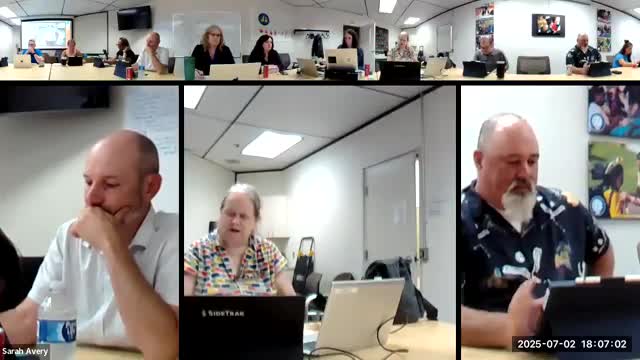
Summary
Board members discussed how the proposed urban renewal boundary could affect district facilities, safe routes to schools and long-term planning, and directed Superintendent Tracy Klinger to draft a response to the city before the July 10 deadline.
Gresham-Barlow School District board members on July 2 directed Superintendent Tracy Klinger to draft a district response to the City of Gresham’s proposed downtown urban renewal plan and to circulate it for board review before the city’s July 10 comment deadline.
The board’s action followed a presentation on the city’s notice and plan, which would create an urban renewal area covering downtown Gresham and parts of adjacent neighborhoods. Mr. Cook, one of the presenters, told the board the plan would “collect and take an additional portion of our local property taxes to fund some of this work” but that any lost local school funding is “backfilled for us by the state,” referring to the state school fund. Mr. Cook said the district’s total dollar amount received from the state would not change, but the tax-collection structure would be altered.
Why it matters: Board members said the plan could affect district-owned property within the proposed boundary — including the district office, Gresham High School and the West Gresham property — and could have implications for student safety and facility capacity. Board members emphasized the need to be at the table as the city finalizes projects and oversight so the district can raise concerns about safe routes to schools, sidewalks and potential impacts on building capacity.
Discussion and specifics
Dr. Tracy Klinger, superintendent, flagged several concerns for the board. “None of the money that is going to this renewal project is going to assist any of the schools. There’s nothing about Gresham-Barlow School District in this whole $132,000,000,” Klinger said, noting that the plan’s project list did not specifically identify benefits for district facilities. She recommended the district request clearer language about protections and explicit collaboration with the school district.
Board members raised transportation and safety issues repeatedly. Board member Blake Peterson noted the district’s largest middle school lacks sidewalks within a 500-foot radius and urged that the district ask the city to consider sidewalks and safe routes as part of the plan. Several board members suggested the district ask the city to expand the urban renewal boundary to include areas where missing sidewalks are a known safety problem.
The board also discussed how urban renewal financing typically works. Presenters and board members explained that, under tax-increment financing, the urban renewal district freezes the base taxable assessed value for the district of taxation and captures the growth (the “increment”) for redevelopment projects. Mr. Cook told the board that because the state school fund adjusts distributions, the district’s total state funding would remain materially unchanged even if the city collects tax increment inside the renewal area, though the district’s tax-collection structure would differ.
Board direction and next steps
The board asked the superintendent to draft a short response that: (1) requests continued and regular communication with the district; (2) asks that the district be represented on any advisory or oversight committee for the urban renewal plan; (3) raises specific concerns about transportation and safe routes to schools; and (4) requests clarification of language in the plan that the board described as vague or noncommittal.
Klinger agreed to prepare a draft and circulate it for review and suggested the letter note that the board had discussed the plan and supported the district’s participation. She confirmed the draft would be ready for board review before the July 10 deadline. The board also asked that the final response be recorded in the district’s public materials (for example, placed on a consent agenda at a future public meeting) so the district’s position is part of the public record.
Other points raised
• Potential for eminent domain: Board members noted the plan contained language that could permit property acquisition; they asked for clarification of any eminent-domain implications for district property.
• Timeline and scale: Presenters and board members referenced a multidecade horizon for urban renewal (board members mentioned 30 and 40 years in discussion) and cited a plan figure in the low hundreds of millions — participants referenced both $130,000,000 and $132,000,000 as plan totals. The board asked for precise project and timeline clarity.
• Housing and enrollment: Board members discussed the potential that new housing could bring additional students but also noted district-wide enrollment trends and capacity. Staff reported that districtwide capacity is not currently near maximum; district-wide utilization figures and local enrollment projections will be factors for future planning if development proceeds.
What the board did not do
The board did not cast a formal vote on the substance of the urban renewal plan itself, and no ordinance or intergovernmental agreement was approved at the July 2 work session. The board’s action was to direct the superintendent to draft and share a response before the city’s comment deadline and to keep the district engaged as planning proceeds.
Looking ahead
Klinger said she will circulate a draft response for board comment and recommended that the district seek a standing intergovernmental connection or update so the district is notified as projects and boundaries evolve. Board members asked that future communications specifically include transportation project details, potential property impacts and any proposed projects affecting the district’s facilities.
Ending
Superintendent Tracy Klinger and district staff will prepare the draft response and circulate it to board members for review before submitting it to the city by July 10. The board also asked staff to place documentation of the district’s response on a public agenda item at a future meeting so the district’s position remains part of the public record.