Get Full Government Meeting Transcripts, Videos, & Alerts Forever!
Get email alerts on the Nuisance Trees topic
No spam. Unsubscribe anytime.
Tree-care companies, arborist urge council to adopt nuisance‑tree ordinance
Summary
Barberton business and arborists told council that a formal nuisance‑tree program and contract model would reduce risk from dead or diseased trees; the public‑safety committee advanced proposed amendments to the city’s tree code to committee action.
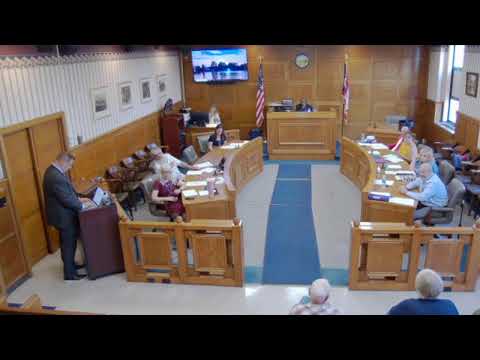
Barberton tree-care professionals and an ISA‑certified arborist spoke at Monday’s council meeting urging adoption of a nuisance‑tree ordinance and a municipal program to assess and remove hazardous trees.
Lisa Davenport, identified in testimony as president of Barberton Tree Service, told council the city lacks a formal ordinance addressing nuisance trees and asked officials to adopt a program that would let qualified contractors evaluate and remove hazardous or dead trees. “These heartbreaking situations should not be reoccurring,” Davenport said, referring to a recent fatality involving a fallen tree.
Adrienne, introduced by Davenport as an ISA‑certified arborist and utility arborist who performs tree‑risk assessments for nearby municipalities, described how other cities run programs. She said most municipalities contract for public‑right‑of‑way and park trees and, when a hazardous private‑property tree is identified, cities typically notify the owner, require removal within a set period (often 10–15 days in the examples cited), and if the homeowner does not comply, the city contracts the work and assesses the cost to the property owner’s taxes.
Committee materials recorded a request from Lisa Miller, the city law director, seeking legislation to amend Barberton Codified Ordinances Chapter 670 (trees, weeds and grass) by adding three sections dealing with hazardous trees and enforcement. The Public Welfare and Safety Committee reported that the ordinance language left committee with a recommendation to proceed; council did not adopt final legislation on the floor Monday.
Arborists recommended the city use standardized tree‑risk assessments and a contracted vendor model to ensure consistent, qualified evaluations and to keep costs predictable. Adrienne said a multi‑year contract for municipal tree work reduces the need to solicit ad‑hoc bids and helps the city respond promptly.
What’s next: The law director’s proposed amendments to Chapter 670 passed out of committee for further action. Council and staff will need to resolve any drafting inconsistencies with the tall‑grass ordinance and finalize enforcement timelines and cost‑assessment procedures before the ordinance reaches a final vote.