Get Full Government Meeting Transcripts, Videos, & Alerts Forever!
Get email alerts on the Property Taxes topic
No spam. Unsubscribe anytime.
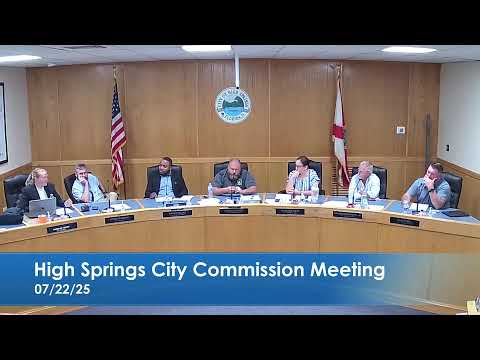
High Springs commission tentatively sets 6.99 maximum millage rate, keeps budget based on 6.74
Summary
The City Commission voted to tentatively propose a maximum millage rate of 6.99 mills for fiscal year 2025–26 while staff said the adopted budget will be based on the current 6.74 mills; two public hearings are set for September.
The City Commission of High Springs tentatively proposed a maximum millage rate of 6.99 mills for fiscal year 2025–26 during its meeting, a move commissioners said preserves flexibility while the city’s adopted budget remains based on the current 6.74 mills. Diane Wilson, the city’s finance director, presented the calculation and said the action sets a ceiling, not a final tax increase.
Wilson said the rollback rate — the millage that would produce the same tax revenue as the prior year given new property valuations — is 6.3438 mills and that the proposed 6.99 mills is about 10.19% above that figure. “We are not in any way building that into the budget,” Wilson said, adding that the city is presenting 6.99 only so the commission retains the option to increase the millage later if unforeseen needs arise.
The finance presentation explained why the city lists a maximum millage higher than the working budget: property values used to compute tax revenue are finalized in July, and the maximum preserves room to respond to mid-year needs without repeating the entire notice process. Wilson gave the commission two tentative public hearing dates for the millage and the budget: Sept. 9 and Sept. 22, with tentative adoption at the first hearing and final approval at the second.
Commissioners debated whether listing a higher maximum could be confusing to residents. Commissioner Howell said she preferred the maximum read 6.74 to avoid misinterpretation; other commissioners, citing potential emergencies or unexpected capital needs, said keeping a buffer was prudent. Wilson estimated that the revenue difference between 6.74 and 6.99 would be roughly $145,000 if the city elected to levy the higher rate.
A motion to tentatively propose a maximum millage rate of 6.99 mills was made, seconded and approved in roll-call fashion. Commissioners recorded “yes” votes during the roll call.
The commission and staff emphasized that the budget as prepared will be based on the current 6.74 mills and that any increase later in the fiscal year would require subsequent formal action and legal advertising. The commission set the advertised tentative maximum to preserve budgeting flexibility while leaving the working assumptions unchanged.