Equity office reports increase in bias reporting; affinity spaces and grants highlighted
Summary
District equity staff presented bias-incident trends and said increased reporting reflects trust in the reporting protocol; community partners and a new Black Student Success Grant were discussed as tools to support students.
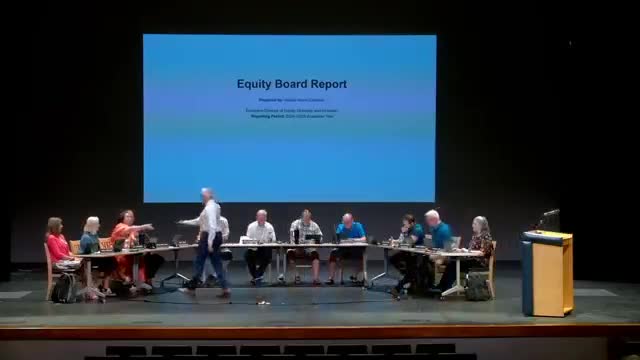
The district’s equity coordinator and a community partner described this year’s equity work, including bias-incident reporting, affinity spaces for students and a new multi-year Black Student Success Grant.
Kelsey, the district equity lead, told the board staff partnered with WestEd and WestEd consultants to coach school administrators and to crosswalk culture‑responsive rubrics into building practices. She shared that bias‑incident reporting numbers rose this year and said the increase likely reflects greater student and staff willingness to report and greater adult follow-up rather than a simple rise in incidents. Kelsey said the district conducted empathy interviews with 25 students at selected schools and used that qualitative feedback in school improvement planning.
Heather, a community partner and non‑profit advocate, described operating affinity spaces (Black Student Unions and broader BIPOC groups) at middle and high schools and said students value cultural affiliation, representation in curriculum and opportunities for mentorship. She urged intentional work to recruit and retain staff of color, expand culturally relevant celebrations and create safe spaces where students and staff feel seen. The equity lead described continuing partnership funding (a multi-year grant) to support those activities and said the district will expand training and quarterly refreshers for building staff on protocols.
Why it matters: Equity work and reporting protocols shape how schools respond to bias and support students’ sense of belonging; affinity spaces and targeted grants are being used to increase reporting and connection.
Next steps: The equity office plans expanded training, building‑level representative teams and continued partnership with WestEd and community organizations to integrate student feedback into improvement plans.