Albany Online program describes growth, capacity limits and new curriculum options
Summary
Administrator John Dilbone told the board Albany Online (AOL) served increased numbers since the pandemic, described provider arrangements and said the program is at staffing capacity for enrollment management though course seats are purchased from external providers.
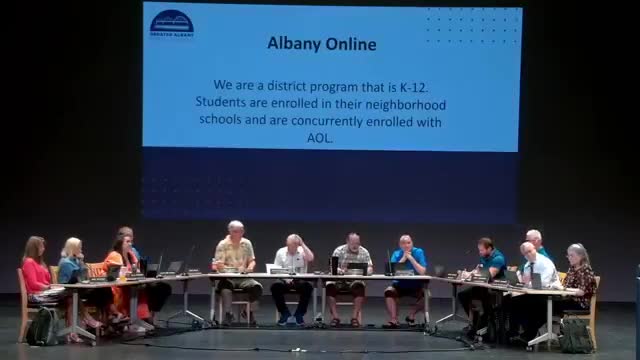
An overview of the Albany Online (AOL) K–12 program drew questions from trustees about enrollment trends and capacity.
John Dilbone, the administrator who oversees Albany Online, told the board the program is a K–12 district program (not a separate school) that enrolled a record number of high‑school students this year and that many families use the program for single classes rather than full‑time enrollment. Dilbone said this year’s counts included about 45 elementary students (39 finished), about 73 middle‑school enrollments (29 finished), and approximately 115 high‑school students over the year with 83 finishing — figures he described as higher than pre‑pandemic norms. He said 42% of AOL students were full‑time while 58% were part‑time.
Dilbone described the program model: parents/guardians serve as learning coaches at elementary levels; teachers are contracted through a service provider (named in the presentation as Scribe, described as now reverting to K12 in how it’s marketed). He described plans to add Edmentum as a second curriculum option to expand class availability. He also described concurrent enrollment practices that keep students registered at their home schools for meal, counseling and special education services while taking classes through AOL; this approach preserves access to services and produces a single report card for students taking classes across settings.
On capacity, Dilbone said the district can purchase additional course seats from providers but that staff time for attendance tracking and enrollment management is the limiting factor; with current staffing he described AOL as near capacity and said an additional half‑time position would be helpful for operations.
Why it matters: AOL provides flexible coursework to students who need alternatives to traditional schedules and supports concurrent enrollment that maintains access to services; program staffing, provider choice and policy rules determine how many students the district can serve.
Next steps: Staff said they will refine policies governing enrollment and credit recovery to support graduation pathways and will return with operational recommendations.