Get Full Government Meeting Transcripts, Videos, & Alerts Forever!
Get email alerts on the Budget topic
No spam. Unsubscribe anytime.
Greater Albany SD projects $4 million shortfall, readies budget committee for cuts and committee work
Summary
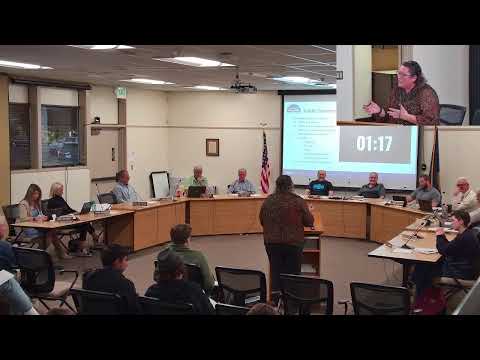
Superintendent Andy told the Greater Albany Public School District board the state revenue forecast cut funding and the district now plans for roughly $4 million in reductions, a process that will continue at budget committee meetings in late May and June.
Superintendent Andy told the Greater Albany Public SD 8J board on Monday that updated state revenue forecasts and federal uncertainty have reduced the district—s projected revenue and that the district is preparing a budget with roughly $4 million in reductions.
The announcement followed the May revenue forecast from the state—s Office of Economic Analysis, which Andy said flagged elevated uncertainties including trade and tariff policy and federal fiscal decisions. Andy told the board the district—s budget package the administration will carry forward totals 11,360,000,000.00 and that a $4,000,000 reduction represents about a 3% cut in the general fund across personnel-bearing accounts.
The budget is on a compressed timeline: the district—s budget committee meets May 28 and again June 11, and the board will have an opportunity to adopt a final budget at its regular meeting on June 23. Andy and business manager Jane Noffsiger told the board the administration will present more detailed staffing and program recommendations at the budget committee sessions.
Most immediately, Andy described several moving pieces that could change the district—s revenue picture: legislative proposals to increase early literacy funding (about $700,000 statewide in the governor—s proposal), a possible increase in special-education weighting (discussed as moving from an 11% assumption toward 14% in committee work), and uncertain federal Title I and IDEA funding. Andy said Title I for the district is roughly $2,400,000 spread across eight schools, but he cautioned that federal formulas and levels remain under negotiation and could produce winners and losers.
Board members and staff discussed the impact of PERS (the public employee retirement system) costs and the unfunded actuarial liability, and Jane Noffsiger outlined that increased PERS costs and salary step/cola provisions have driven pension-related expenditure growth. Andy and Jane also emphasized that declining enrollment continues to place structural pressure on the budget because state funding is largely enrollment-driven; the district is being funded on a higher prior-year ADM for 2024–25 that temporarily softens the hit but projected ADM declines factor into the 2425 forecast.
On staffing, Andy said the district intends to continue competitive salary adjustments (roughly 2–2.5% cost-of-living adjustment projections currently modeled) while trying to reduce the shortfall through targeted program and central-office adjustments rather than across-the-board cuts to schools. He said the administration expects to present staffing scenarios and program impacts to the budget committee and asked board members to submit questions ahead of the May 28 meeting so the administration can provide answers at the second session.
—We are continuing to work towards right-sizing the district,— Andy said in his presentation, adding that the district has exhausted ESSER funds and must make choices about sustaining curriculum or other investments.
The board did not take a final budget vote at the meeting. Instead, members directed staff to proceed to the budget committee meetings and to return with specific options, program-level impacts, and any recommended changes to reserves or one-time spending.
What happens next: the budget committee is scheduled to convene May 28 at 7 a.m. with a follow-up session June 11; the full board is scheduled to consider the final budget at its June 23 meeting. The administration said it will provide line-item scenarios, staffing options, and a list of programs that would be affected under varying revenue outcomes.