Get Full Government Meeting Transcripts, Videos, & Alerts Forever!
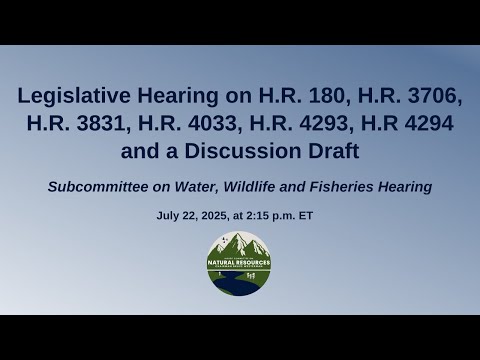
House subcommittee considers bill to exempt captive-bred sturgeon from some ESA restrictions
Summary
The Sturgeon Conservation and Sustainability Act would exempt certain sturgeon legally raised and documented in captivity from some Endangered Species Act prohibitions; sturgeon farmers testified they need the change to operate, while the Fish and Wildlife Service said it supports the goal but highlighted enforceability concerns.
Representative Fine introduced H.R. 4,033, the Sturgeon Conservation and Sustainability Act of 2025, which would amend the Endangered Species Act to exempt sturgeon legally held in captivity and their progeny from certain ESA prohibitions unless reintroduced to the wild. Representative Fine said the bill is intended to enable domestic aquaculture businesses to produce caviar and sturgeon products from captive-bred fish without affecting wild populations.
Gino Evans,…
Already have an account? Log in
Subscribe to keep reading
Unlock the rest of this article — and every article on Citizen Portal.
- Unlimited articles
- AI-powered breakdowns of topics, speakers, decisions, and budgets
- Instant alerts when your location has a new meeting
- Follow topics and more locations
- 1,000 AI Insights / month, plus AI Chat