Get Full Government Meeting Transcripts, Videos, & Alerts Forever!
Get email alerts on the Problem Solving Courts topic
No spam. Unsubscribe anytime.
LaSalle County officials brief committee on problem‑solving courts, plan community outreach
Summary
Probation staff presented a video and brochure describing LaSalle County’s grant‑funded problem‑solving courts and intensive probation programs, explained team staffing and certification, and agreed to gather recidivism metrics before wider marketing.
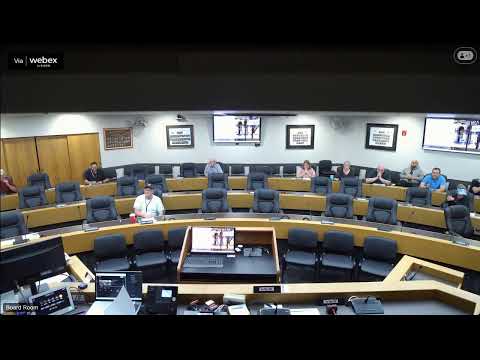
LaSalle County probation staff presented a community‑outreach plan for the county’s problem‑solving courts and intensive probation program to the Law and Justice Committee during its July 22 meeting, and committee members asked staff to compile outcome data before expanding public promotion.
The presentation, which included a brochure and an informational video, described the county’s grant‑funded programs: drug court and Treatment Alternative Court (TAC) under the problem‑solving court model, and an intensive probation program funded through a separate grant. The programs combine judicial oversight, treatment and support services, and phased supervision to reduce incarceration and address underlying causes of crime.
County probation staff said intensive probation began in 2014 and that the problem‑solving court grant process started in 2018 with operations beginning in 2020. Specialty Court Coordinator Andrew Kryshel described teams that include the presiding judge, a member of the state’s attorney’s office, the public defender, sheriff’s department, probation staff, the specialty court coordinator and treatment providers. Kryshel said drug court and TAC operate on four phases with typical program lengths of about 18 to 24 months; intensive probation uses three phases and is intended as an alternative to prison for eligible post‑conviction clients.
Committee members asked about program outcomes and recidivism tracking. Chuck (probation department staff) said the county has not tracked long‑term recidivism for participants beyond the immediate post‑graduation period and agreed to try to produce recidivism metrics from the case management system. Assistant State’s Attorney Navarro told the committee it is difficult to fix long‑range success figures because participant status changes over time but said the availability of state grant funding indicates programs are meeting some oversight thresholds.
Presenters said both problem‑solving courts are certified through the Administrative Office of the Illinois Courts (AOIC) and that grant sponsors and AOIC certification set training and operational requirements. The county’s drug court meets weekly for staffing; Kryshel said each case is staffed weekly so the team can consider incentives, sanctions or therapeutic adjustments. North Central Behavioral Health was identified as a treatment provider for the programs.
Committee members and staff agreed on two near‑term items: probation will pursue available recidivism numbers and will proceed with planned outreach materials once staff can present evidence of program outcomes to support marketing. The committee approved the probation report as presented.
The presentation included a fictionalized case example in the video to illustrate how drug court combines treatment and judicial oversight; committee members noted the illustration’s purpose was outreach rather than a change in program rules.
The discussion covered certification, weekly staffing, program phases, and the county’s plan to use grant funding for staffing and outreach. There was no new ordinance or rulemaking proposed at the meeting; the committee’s action was limited to approval of the monthly probation report.