
BZA takes no final action on Eastlake sidewalk variance after legal conflict; item reset
Get AI-powered insights, summaries, and transcripts
Subscribe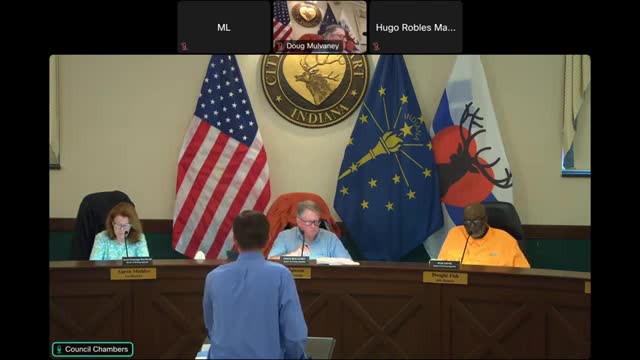
Summary
The board did not reach a final decision on a request by a new homeowner in Eastlake Estates to avoid installing a public sidewalk; staff recommended denial, the petitioner sought relief, legal counsel flagged a procedural conflict, and the item was carried to the next meeting.
A request by a homeowner in the Eastlake Estates subdivision to vary the city pedestrian‑access requirement and not install a public sidewalk was not decided by the Elkhart Board of Zoning Appeals after board members and legal counsel identified a conflict between staff and petitioner findings; the petition will be returned to a future meeting.
Petitioner Mark Sharp asked the board to allow his newly built house at 1626 East Lake Drive West to forego a public sidewalk, saying the street has no contiguous sidewalks and that adding one at his lot “would look unsightly and kind of look out of place.” He said neighbors he spoke to do not want sidewalks and that people in the subdivision are used to walking in the street.
Staff recommended denial of the variance, citing section 26.7.C.702.a (pedestrian access) and arguing sidewalks are part of established development standards intended to separate pedestrians from vehicle traffic. Staff noted the subdivision dates to the 1950s and that sidewalks exist in other phases; staff also said the petitioner chose not to install the sidewalk at the time of construction and therefore relief was not warranted. Staff reported 21 letters were mailed; three returned in favor and one comment noting the HOA supports not installing the sidewalk.
During the board discussion the petitioner’s motion to adopt the petitioner’s documents as the board’s findings was made and seconded, but legal counsel advised that the board must explicitly choose to accept either staff findings or the petitioner’s findings because they were in conflict. The motion was withdrawn and a new motion adopting the petitioner’s findings was made and seconded. When the roll call was taken, the board announced “no action” because the panel lacked the required number of affirmative votes for a final decision; the item was reset for the next month.
Staff told the board that if a sidewalk were installed, the city would assume long‑term maintenance of the sidewalk while the homeowner would mow the tree lawn; the board noted alternative city sidewalk funding or Board of Works policy could be pursued separately.
The petition remains unresolved; the board will reconsider the case at a later meeting after clarifying the conflicting findings and vote requirements.