Get Full Government Meeting Transcripts, Videos, & Alerts Forever!
Get email alerts on the Zoning Rezone topic
No spam. Unsubscribe anytime.
Santaquin planning commission unanimously forwards negative recommendation on Frasier rezone request
Summary
The Santaquin City Planning Commission voted unanimously to forward a negative recommendation to the City Council on a request to rezone roughly 4.414 acres owned by Troy and Kelly Frasier from R-10 to Residential Agriculture, citing minimum-lot requirements and potential impacts to surrounding properties.
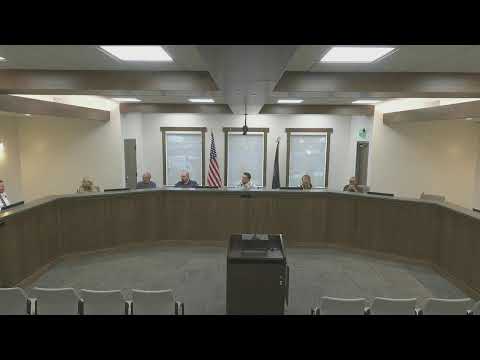
The Santaquin City Planning Commission on July 22 voted unanimously to forward a negative recommendation to the City Council on a request to rezone about 4.414 acres owned by Troy and Kelly Frasier from the R-10 residential zone to the residential agriculture zone.
The commission’s recommendation came after a public hearing in which neighbors raised complaints about animals, odor, property maintenance and code violations. Planning staff told the commission the property does not meet the residential agriculture zone’s 5-acre minimum and that some of the animals currently on the site are not allowed under the R-10 zone, which is why the Frasiers requested the rezoning.
Troy Frasier, the applicant, told the commission he and his family have used the parcel for agricultural purposes for more than 20 years and that their intent was a small hobby farm rather than commercial operations. "Residential agriculture is basically a residence, and agriculture. It's not for huge farming," Frasier said, adding that his family typically keeps about four cattle at a time and that they view the use as a multi-generational family activity.
Several neighbors disputed Frasier’s description of the site and said the current animal operations have caused nuisances. Ross Williams, who identified himself as a cattleman, told the commission, "This is freaking ridiculous," and said the property lacks adequate fencing and has become an "eyesore and a nuisance" since the Frasiers moved in. Other speakers described persistent odor, flies, animals pressing against shared fences and dogs that enter adjacent yards.
Planning staff noted the rezone request addresses two separate issues: the rezoning itself (a legislative matter to be decided by the City Council) and related code-enforcement concerns that brought the matter to staff attention. A staff speaker said the record shows the parcel has been zoned R-10 for decades and that city animal regulations allow some animals (for example alpacas) in R-10 while cows, mink, pigs and roosters are only allowed in agricultural zones. Staff also said they were unable to find an exact date when the zoning changed to R-10 in city records going back to the early 2000s.
Commissioners discussed whether the parcel would create an "island" of agricultural zoning and whether the proposed use would affect surrounding properties. Several commissioners said the zoning code’s 5-acre minimum for residential agriculture was dispositive. "The current regulations state that it has to be 5 acres minimum and it doesn't meet that," Commissioner Waite said during discussion. Because the parcel is smaller than the 5-acre minimum and has not shown a continuous historical use that would grandfather cattle operations, the commission concluded it could not support the requested rezoning.
Commissioner Hoffman moved to forward a negative recommendation to the City Council; the motion was seconded by Commissioner Tolman and passed unanimously. Voting yes were Commissioners Romero, Nixon, Woodall, Hoffman, Waite and Tolman. The commission's action is a recommendation only; the City Council will make the final decision at a future meeting (staff said the next likely council meeting for this item is Aug. 19). Staff also said separate code-enforcement follow-up will continue irrespective of the rezoning recommendation.
The commission closed the public hearing at 7:37 p.m. and approved the motion to send a negative recommendation to the City Council at the July 22 meeting.
What happens next: The negative recommendation will be included in the planning record and transmitted to the City Council, which will consider the rezoning request and associated materials at a future council meeting. Code enforcement staff will continue to address nuisance complaints raised during the hearing.