Get Full Government Meeting Transcripts, Videos, & Alerts Forever!
Get email alerts on the Land Use Zoning topic
No spam. Unsubscribe anytime.
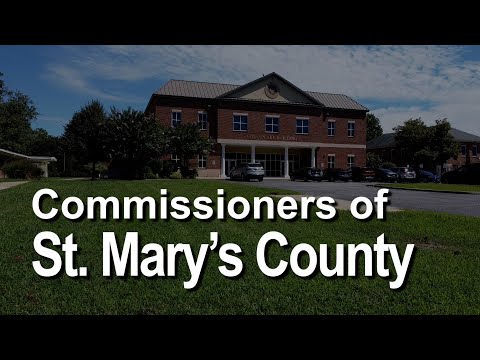
St. Mary’s commissioners direct staff to draft zoning text amendment on future fuel-sale locations
Summary
After a lengthy discussion about perceived oversaturation of gas stations, the St. Mary’s County commissioners voted to direct the county attorney and planning staff to draft a comprehensive zoning text amendment to give planning authorities tools to evaluate future fuel-sale sites.
The Commissioners of St. Mary’s County voted July 22 to direct the county attorney’s office and the Department of Land Use and Growth Management to draft and recommend an ordinance amending the county’s comprehensive zoning ordinance to address future locations for fuel sales.
The move followed a multi-hour discussion in which county legal staff outlined options ranging from a narrow text amendment to a temporary moratorium while staff studies the issue. "A moratorium is just one of the options," county attorney staff said during the briefing. Commissioners said they wanted planning staff to have additional tools to evaluate whether a proposed fuel-sale site meets local needs.
The county attorney’s office told commissioners there are roughly 45 gas stations in the county with about half concentrated in several ZIP codes in the Lexington Park/Greater Lexington Park Development District and nearby areas. The attorney’s memorandum and remarks noted that current county zoning does not treat community need as a standard for permitting gas stations; the comprehensive zoning ordinance specifically references community-need review for only four uses (commercial cell towers, private waste transfer/recycling, new water-dependent facilities in the critical area, and educational facilities in the Rural Preservation District).
Commissioners debated alternatives. Supporters said a written needs analysis or a conditional-use standard would give the planning commission and Board of Appeals discretion to consider local impacts. Opponents warned that imposing new requirements could restrict property owners and small businesses, and that large corporate applicants typically commission market studies before developing sites.
The county attorney’s office presented legal background, citing that courts have allowed local governments to regulate land use under police powers where tied to the public good; staff referenced the Montgomery County-era Lucky Stores decision as an example of a jurisdiction that treats fueling stations as a conditional use and asks for a showing of community need. The county attorney said some neighboring counties use conditional-use or spacing requirements for fueling sites, and that Saint Mary’s County has the legal authority to adopt similar measures if the commissioners choose to do so.
Commissioners discussed whether a moratorium would be appropriate. County attorneys warned moratoria are temporary measures that must meet constitutional standards and that projects with validly issued permits and substantial construction in progress typically retain rights to complete construction under the laws in effect when permits were issued. The attorney added that there were no pending new concept site plan applications that a moratorium would halt, and that the three sites already in active development had permits and construction underway.
After discussion, a commissioner moved and another seconded a motion directing staff to draft a zoning text amendment regarding future fuel-sale locations and to coordinate with the planning commission as appropriate. The motion was approved by the board. The commissioners did not adopt a moratorium; they directed staff to return with draft language and recommendations for next steps, including whether to refer matters to the planning commission for further review and public hearing.
Next steps identified by the board include staff drafting proposed text changes, evaluating whether a needs-analysis requirement should be narrowly targeted to fueling stations or applied more broadly, and reporting back to the commissioners with legal analysis and recommended procedures for public hearings and implementation.