Get Full Government Meeting Transcripts, Videos, & Alerts Forever!
Get email alerts on the Education Policy Counseling topic
No spam. Unsubscribe anytime.
Public speaker urges board to reject counseling policy revision as committee advances vendor updates
Summary
A public commenter pressed the board July 21 to halt a second‑reading revision to Policy 24.11 (counseling services), while the policy committee reported a broader effort to replace out‑of‑date local policies with vendor model language and to abolish conflicting facility‑use policies.
A Raritan Township minister urged the Hunterdon Central Board of Education July 21 not to approve a revision to the district's counseling policy on second reading, saying the newer draft omits language he and others valued from the older policy.
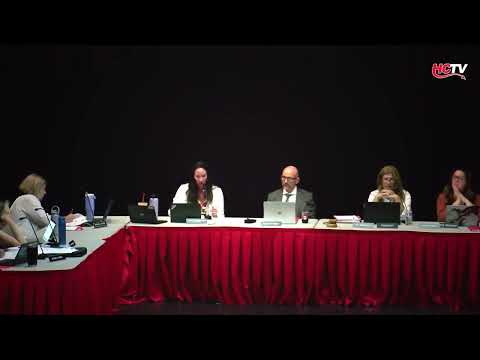
"Can you tell us if you still believe in the philosophy and theory of action of the district's former policy at 24 11, counseling services?" Reverend Vernon Williams asked during the meeting's public forum, addressing the superintendent and board. Williams said the prior policy explicitly framed counseling around building strong, culturally responsive relationships with students and families and warned that the revised policy could reduce services.
The board did not take action immediately in response to that single public comment; the policy committee later reported work on a multi‑month overhaul of the district policy manual. Rebecca Peterson, policy committee chair, summarized the committee's July 10 meeting and said the board is replacing many older local policies with updated vendor model policies to bring the manual into compliance and to resolve conflicts. She said the committee planned to adopt an updated acceptable‑use policy and to abolish an older facilities communication policy (75.10.1) that conflicted with the vendor's mandated facilities policy (75.10).
Peterson noted that the administration amended some policy language to align with current practice (for example, administrative vacation and military leave language) and that some older policies had been missed in prior policy cycles. The policy slate advanced on motions and roll calls at the July 21 meeting; board members recorded a mix of yes and no votes on specific items but the overall motions passed. Two board members registered specific no votes on select items, though the motions carried by majority roll call.
Why it matters: counseling policy language governs the district's stated priorities for student social‑emotional services and can shape expectations for counselors' roles and for public transparency about services. Changes to policy wording do not by themselves change day‑to‑day counseling practice, but they affect governance, public notice and the formal policy manual that the board must keep current.
What happened next: the policy committee moved several items forward for second reading and abolition of conflicting policies; the board approved the motions on roll call. A public commenter asked the board explicitly not to approve the counseling change; the record shows the comment occurred during the action‑item public forum.
Ending: board members and the committee chair said they will continue to publish minutes and regulatory drafts; one board member requested the draft administrative regulation for 75.10 be provided alongside the second read so members can review details before final votes.