Get Full Government Meeting Transcripts, Videos, & Alerts Forever!
Get email alerts on the Accessibility topic
No spam. Unsubscribe anytime.
Resident urges Roanoke to improve chamber accessibility, cites Market Building obstacles on ADA anniversary
Summary
On the 30th anniversary of the Americans with Disabilities Act, a resident told Roanoke City Council on July 21 that the council chamber podium and downtown Market Building sidewalks are not accessible and urged immediate changes.
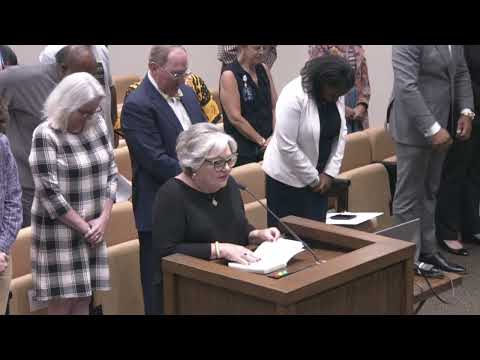
Dwayne Howard, a resident and former member of the Alexandria Commission for People with Disabilities, told Roanoke City Council on July 21 that the council chamber’s fixed podium and downtown Market Building sidewalks create accessibility barriers and urged the city to adopt adjustable, lowerable tables and improve clear pedestrian access.
“This podium is one of the biggest detriment to people with disabilities,” Howard said, urging a power table that can be lowered so speakers can sit without calling attention to themselves. He described sidewalks near the Market Building as blocked by restaurant seating, saying some wheelchair users avoid downtown because of navigation difficulties.
Howard framed his remarks on the city’s observance of the 30th anniversary of the Americans with Disabilities Act. Council and staff responded that chamber renovations were planned: during closing remarks the city manager announced the council chamber “will be going through some changes as well in the next two weeks…we hope in most every way will be more accessible to everyone who is able to come and be a part of our meeting.” The council did not adopt a formal motion that night on specific accessibility retrofits; staff follow-up and the earlier bond authorization (which lists elevators as a priority) provide potential funding and scheduling pathways for accessibility work.