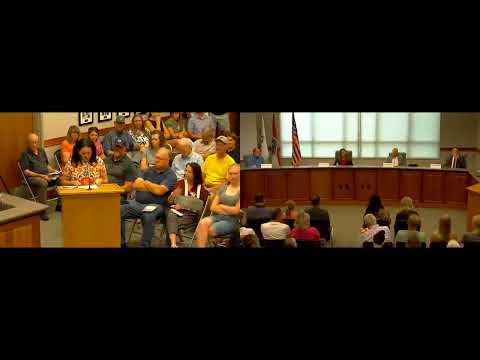
Mapleton candidates debate housing, general plan and property rights
Summary
Candidates at a Mapleton forum discussed affordable housing, the city’s general plan and transfer‑of‑development‑rights (TDR) program, balancing density, open space and property‑owner rights.
At a Mapleton mayoral forum, candidates returned repeatedly to growth and development issues, including the city’s general plan, affordable housing, accessory dwelling units (ADUs) and the transfer‑of‑development‑rights (TDR) program.
Why it matters: Speakers linked development rules and the general plan to the city’s long‑term character and the availability of housing at different price points. Several candidates emphasized that the general plan and zoning determine what can be built, while others urged creative, local measures to ease housing costs.
What candidates said
Scott Ligon, a candidate, said the city’s general plan sets the framework for density and urged citizens to decide whether the plan’s projected build‑out is what they want: “If it builds up to 35,000 people, it will be just like Provo. So my question is, is that what everybody wants?”
Dallas Higgs, the incumbent mayor in the forum, stressed adherence to the general plan and zoning: “The general plan, the way it's set up today, will work … The studies prove that it works.” He argued enforcement of current zones and ordinances preserves community character while allowing planned development. Higgs also said the city had secured developer dedications and infrastructure as part of recent growth.
Baron (candidate) explained a construction and manufacturing approach to lower housing costs and urged continued emphasis on accessory dwelling units: “What we've done in Mapleton over the past few years is creative, is focused more on the ADUs, accessory dwelling units, and allowing more people to do those cheaper so that you can have a second family in your home.”
Scott and others raised the TDR program as a specific concern. Ligon said there remain roughly 120 TDRs held by about 16 owners (as reported by the city) and suggested a buyback program or negotiated exchanges to control density where desired.
Open space and property rights
Candidates agreed that protecting open space had been a focus, and Dallas described more than 50 acres secured recently for parks through negotiations and developer agreements. At the same time, several speakers warned the city must honor property rights: if owners comply with zoning and statutes, development rights generally follow.
What was not decided
The forum generated debate and candidate positions; it did not produce council votes or ordinance changes. Candidates differed on whether the city should seek additional restrictions on development or rely on the existing general plan and enforcement.
Next steps
Candidates said that future decisions would rest with the mayor and the city council through regular agenda and ordinance processes. Some called for more public engagement so residents can decide whether to keep the current general plan trajectory or seek changes.
AI generated
The text on this page is AI generated. Summaries, highlights, analysis, and video transcripts are all produced from the original source material.
AI can make mistakes, so if you spot one, and we will fix it for everyone.
Note: the source content is unaltered by us. Any content source we link to, be it a video, an audio recording, or a document, is presented exactly as its publisher released it. That publisher is usually a government body, sometimes an individual official or another organisation.