Get Full Government Meeting Transcripts, Videos, & Alerts Forever!
Get email alerts on the Police Leadership Training topic
No spam. Unsubscribe anytime.
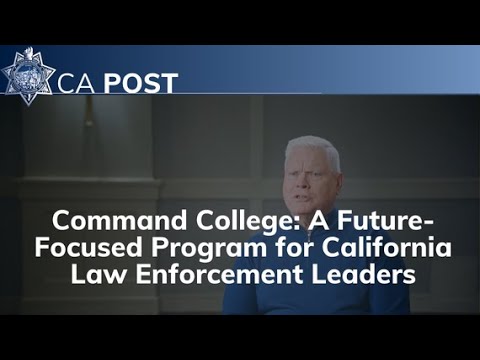
Alumni say Command College broadens police leadership skills and career prospects
Summary
Graduates described how the Command College deepened leadership thinking, built networks across agencies and accelerated career advancement, but no formal actions were taken.
Graduates of the Command College told meeting attendees that the program teaches strategic thinking that helps law enforcement leaders anticipate problems, act faster and advance in their careers.
Alumni said the program mixes classroom instruction with peer breakouts and statewide perspectives that change how officers approach management and decision-making. “I am Chief Fabian Valdez, and I'm a Post Command College alumni,” one speaker said when identifying themselves at the close of the presentation; other speakers gave similar identifications.
The alumni described several concrete benefits. One attendee said growing up in an unsafe neighborhood and experiencing repeated police responses inspired a career in law enforcement, and another described joining the Navy at 17 and serving as a master at arms (the Navy's military police) before applying to civilian policing. Speakers said one graduate completed an academy and a college degree in the same month and later earned a doctorate in 2017. Several alumni said they used techniques taught at Command College in both their professional and personal lives.
Speakers described the classroom format and network as key features: instructors prepare participants for difficult sessions, breakout groups let officers share agency practices from around the state, and ongoing peer relationships provide a continuing resource after the course ends. One alumnus said that within a couple of years of completing Command College they were promoted to captain; others described promotions and appointments to higher ranks as a direct result of the training and subsequent leadership work.
Presenters emphasized that Command College aims to shape senior leaders so they “act ahead of the organization,” giving attendees frameworks to see emerging problems sooner and respond more effectively to protect the public. The presentation repeatedly framed the program as an investment in future executives rather than simply a credential.
No motions, votes or formal requests for funding or policy changes were recorded in the transcript. The session consisted of alumni testimonials and explanations of the program’s approach to management, innovation and futuring techniques.