Get Full Government Meeting Transcripts, Videos, & Alerts Forever!
Get email alerts on the Transportation Safety topic
No spam. Unsubscribe anytime.
City, regional engineers present safety audit of U.S. 63 intersections; recommend short- and long-term fixes
Summary
The City of Kirksville and regional planning partners on Thursday presented findings of a Safe Streets for All–funded road safety audit of U.S. 63 corridors in and near the city, identifying high travel speeds, wide multi‑lane crossings and confusing ramp geometry as recurring contributors to crashes and near‑misses.
The City of Kirksville and regional planning partners on Thursday presented findings of a Safe Streets for All (SS4A) road safety audit of U.S. 63 corridors in and near the city, identifying high travel speeds, wide multi-lane crossings and confusing ramp geometry as recurring contributors to crashes and near-misses.
The audit, funded through an SS4A grant administered by the U.S. Department of Transportation and executed by the Northeast Missouri Regional Planning Commission with McClure Engineering and McLaren Engineering staff, examined seven locations along the 63 corridor inside city limits. The study team identified short-term low-cost measures (signing and striping, converting right-yield movements to stop control), midterm changes (acceleration/merge lane improvements, channelized islands) and long-term reconstruction options (grade-separated interchanges, roundabouts, R‑cut configurations or a divided four-lane highway) depending on location and funding.
Why it matters: Several intersections along the 63 alternate/bypass have a pattern of angle and rear-end crashes, limited sight distance and nighttime collisions in specific locations, the presenters said. With continued traffic growth — and planned developments including a forthcoming cancer treatment center — staff and planners said improvements could reduce crash risk and support economic activity in the corridor.
Key findings and near-term ideas from the audit included: - At the Illinois Street bypass intersections, high posted speeds on U.S. 63 and wide, multi-lane crossings make it difficult for side‑street drivers to judge gaps. Short-term options: place right-turn movements on stop control or convert side streets to right‑in/right‑out only; midterm options: add acceleration/merge lanes; long-term: grade‑separated interchanges or roundabouts. - At Baltimore Street and East Illinois (a signalized urban intersection), the team found long signal delays, rear‑end crashes on the southbound approach and tight corner radii. Suggested steps: signal timing adjustments, no‑turn‑on‑red signs, driver feedback speed signs, and potential channelization or roundabout in the long term. - At northbound and southbound ramps in the northern interchange, the auditors noted confusing ramp striping and substandard merge distances; they recommended better pavement delineation, additional stop signs for clarification and extension of merge lanes where feasible.
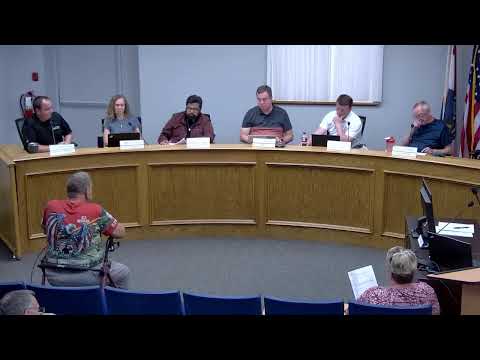
Participants and next steps: The audit team included McClure Engineering (Aaron McVicker, project manager), McLaren Engineering (Joe Johnson), Chris Feeney from the Northeast Missouri Regional Planning Commission, Missouri Department of Transportation staff, and Kirksville police and fire representatives. City Public Works Director Adam Dorril summarized the local role in the study and told the council the city is prepared to partner with MoDOT on implementation. Chris Feeney said any implementation on state routes would be a joint effort with MoDOT and that local match or “skin in the game” can improve a project’s chances for priority funding.
Officials noted one remaining year of the current SS4A funding cycle and other federal programs (RAISE/BUILD) as possible implementation sources; they said the audit will strengthen future applications. Presenters and council members repeatedly stressed that further design and agreement with MoDOT would be required before making geometric or signal changes.
Public input: Several residents urged more aggressive, permanent fixes including grade separations or flyovers and cited recent serious crashes. The presenters acknowledged those concerns and said the audit provides data to pursue funding and engineering design.
What council decided: The council took no immediate regulatory action but received the report and directed staff to continue coordination with the regional planning commission and MoDOT toward prioritized design and funding applications.