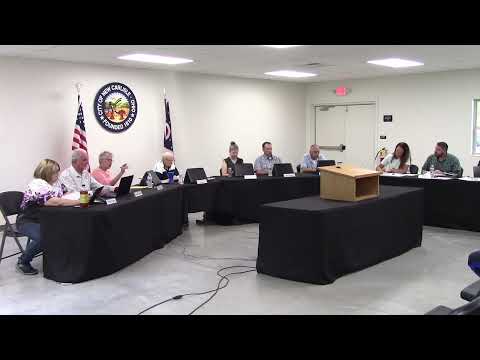
New Carlisle council weighs city-contracted sidewalk repairs, possible tax assessments and fee waivers
Loading...
Summary
Council members debated a proposal to have the city contract neighborhood sidewalk repairs, offer a reduced collective rate, allow homeowners to pay before assessment and potentially waive permit fees; staff will research legal and procedural details under the Ohio Revised Code.
City officials in New Carlisle spent nearly two hours on July 7 discussing a plan to repair deteriorated sidewalks in older neighborhoods by contracting crews to do grouped street-by-street work, billing homeowners and, if unpaid, placing the charge as a property tax assessment. The discussion began during the city manager's report when the manager raised sidewalk conditions in the historic district and asked council whether the city should contract whole streets for repair and then assess unpaid homeowner portions to property taxes. Council members asked whether homeowners could pay invoices before assessment, whether permit fees could be waived, and how payment plans would be handled. Service Director Mr. Kikko said the city typically gives residents a 30-day window to do work themselves; if they do not, the city can contract for the work and later bill the homeowner. He described typical scope: replace nonconforming panels, fix trip hazards greater than a quarter-inch and address root heaves. Kitko (alternate transcript spelling) estimated contractor economies of scale when the city brings a truck in for multiple squares on a street. He noted potential prevailing-wage thresholds for larger contracts and that assessment terms often vary (examples cited: five- or ten-year assessments for larger amounts), but said he would need to “dig into” specific ORC language. Council members repeatedly urged that homeowners be offered the reduced contractor rate and time to pay before any tax assessment is placed. Councilman Bond and others asked staff to avoid charging permit fees to homeowners when the city contracts and inspects the work, saying fees would feel like “double-dipping.” City Manager Mr. Hall said staff would research the permitting and assessment procedures and suggested the council could motion to waive fees for streets included in a city program. Several council members and residents highlighted safety concerns. A public commenter, Kelly Dupuis (122 North Clay), said family members who use nonmotorized wheelchairs must use the street because sidewalks are unsafe; other council members described situations of residents in motorized chairs riding in the street because sidewalks are impassable. No ordinance or formal vote on the sidewalk program occurred July 7. Council directed staff to research: (1) whether assessments may be structured to allow post-invoice payments prior to formal placement on tax rolls; (2) how prevailing-wage rules might apply; (3) options for permit fee waivers for city-contracted work; and (4) potential funding or grants for historic-area sidewalks. The city manager and service director are to report back with findings before drafting legislation. The council indicated willingness to pursue a targeted program (street-by-street) rather than a citywide mandate and asked staff to consider social-services or volunteer resources to assist low-income homeowners. Staff said more detailed program terms would be drafted after legal review of the Ohio Revised Code sections governing sidewalk assessments and abatement practice.