Get Full Government Meeting Transcripts, Videos, & Alerts Forever!
Get email alerts on the Education Budget Compensation topic
No spam. Unsubscribe anytime.
Belton ISD staff outline 2025–26 budget shortfall, recommend raises tied to state allotments
Summary
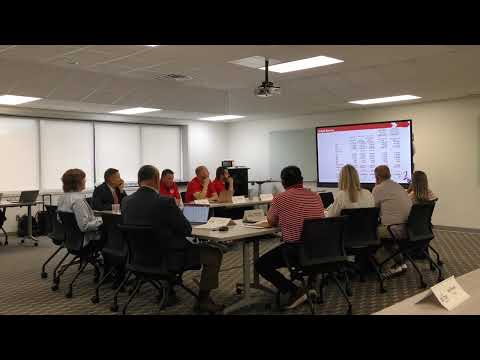
Belton Independent School District staff presented a budget and compensation update at a July 21 board workshop, telling trustees the district faces multiple funding changes that leave it close to policy minimums for fund balance and require trade-offs ahead of the August budget adoption.
Belton Independent School District staff presented a budget and compensation update at a July 21 board workshop, telling trustees the district faces multiple funding changes that leave it close to policy minimums for fund balance and require trade-offs ahead of the August budget adoption.
Melissa Lafferty, district staff, said the district’s budget models use an average daily attendance (ADA) of 12,633 — a 93% attendance rate — and a preliminary 6% increase in property values. “So, for average daily attendance, we’re gonna use 12,633, which is 93% attendance rate,” Lafferty said. She told the board certified property values were expected within days and that the district’s compressed tax rate was currently about 75.52 cents per $100 of valuation.
The models reflect state and federal changes, staff said. Todd Schiller, district staff, said the district is absorbing an estimated $528,000 loss tied to reductions in Title II, III and IV federal grants and cited a separate roughly $1.2 million reduction tied to SHARS and other federal changes, which district speakers described together as “right at $2,000,000” in decreased federal funding the district must address. “The run that we have kind of been comparing ourselves to…these models are absorbing 528,000 for that loss in funding,” Schiller said; district staff later summarized other federal funding reductions that bring the total near $2 million.
Staff described several specific budget assumptions and changes: $500,000 planned for capital improvements; an assumed $600,000 increase for utilities and insurance (lower than an earlier $800,000 estimate); and a basic allotment increase of $55 to $6,215 per student in the state funding model. Under Budget Amendment 10, Lafferty said, the district currently projects about a $6 million deficit for 2024–25 but would remain near a 20% fund balance; she said a final budget amendment is expected in August once payroll and year‑end accounting are complete.
On compensation, staff outlined the state’s House Bill 2 allotments and the district’s recommended package. Schiller said the teacher retention allotment is about $3.6 million and a support‑staff retention allotment is roughly $476,000; an allotment for basic costs (benefits) was cited at about $464,000. “The teacher retention allotment…that’s about $3,600,000,” Schiller said. District staff described a combined package that averages about a 7% increase across the teacher pay scale: the district would apply the state-required dollar amounts for experienced teachers (district staff described $2,500 for teachers with three to four years’ experience and $5,000 for five or more years, per HB 2), and the district would use local funds to provide smaller increases for teachers in years zero to two.
For non‑teacher employees, staff proposed the use of state retention allotments and an additional local supplement: paraprofessionals and auxiliary staff would receive a $0.50 hourly increase; librarians and nurses a 1% increase; and administrators a 1% increase funded from local dollars (staff noted administrator increases are not covered by the state allotment). The superintendent (unnamed) told the board the 1% recommendation for administrators “does not include me… I’m a 0%.” District staff said the combined package would still require the general fund to cover portions of the raises and associated benefits not funded by state allotments.
Board members and staff discussed district competitiveness and vacancies. Todd Schiller said teacher vacancies were roughly 30–35 openings at the time of the workshop, and paraprofessional/aide openings were also about 30; recent school‑nutrition hiring produced seven to nine new hires. Staff and trustees discussed market position, noting that moving paraprofessional starting pay by the proposed $0.50 could raise the district’s position from roughly 90% of the local market median toward about 94–95%.
Staff cautioned that several items remain uncertain and could change the budget outlook: certified property values, final state allotment interpretations, the timing and scope of federal grant reinstatements (if any), and special education funding reforms that take effect in later years. Melissa Lafferty said the district is continuing work on attendance initiatives and other adjustments to reduce projected shortfalls before the August budget adoption.
No formal budget adoption or vote occurred during the workshop. Staff said the compensation plan and Budget Amendment 10 would be presented as action items in the district’s regular board meeting later that evening for possible board action.
Trustees asked staff to continue refining expenditure and revenue projections, to monitor federal funding developments and to return with final figures in August as the district seeks a balanced 2025–26 budget that stays within the board’s fund‑balance policy.