Get Full Government Meeting Transcripts, Videos, & Alerts Forever!
Get email alerts on the Charter Structure topic
No spam. Unsubscribe anytime.
Charter review team outlines proposed cuts to old language and explains government form options
Summary
University researchers and the Charter Review Committee described edits to Augusta Richmond County's charter, including removing outdated and duplicative text, and presented common local government forms — strong mayor, weak mayor, manager and commission — for public feedback.
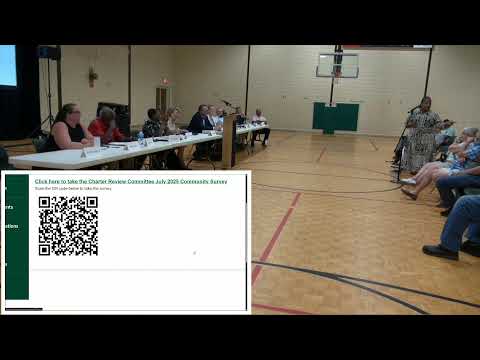
At a July public hearing of the Charter Review Committee, Dr. Rex Facer of the Carl Vinson Institute of Government at the University of Georgia summarized the committee’s work reviewing the Augusta Richmond County charter and described the principal forms of local government the committee is considering.
The committee, Dr. Facer said, has already voted to remove “anticipatory language” written for situations that no longer exist, as well as charter text that duplicates state law and sections “better dealt with in the ordinance.” He said the committee’s long-term task is to produce a revised charter that would then be forwarded to the local legislative delegation and, if substantial changes are proposed, to the Georgia General Assembly.
The revisions, Facer said, focus on three kinds of edits: removing language that assumed future events that have already occurred, removing duplicate language found in state code or the state constitution, and stripping out provisions that are better handled by ordinance because they change frequently (for example, compensation or administrative procedures). “The charter document is essentially the constitution for a local government,” Facer said. “Without the charter, the local government wouldn’t have the ability to create any local laws.”
As part of the public education portion of the hearing, the Carl Vinson presentation reviewed four common organizational models. In the “strong mayor” model, the mayor holds primary executive authority, typically appoints department heads, develops and submits the budget, and may hold veto power. In “mayor‑commission” or “weak mayor” models, the mayor has primarily ceremonial duties and the commission acts collectively; appointments and executive direction require commission action. In a commission‑manager form the commission appoints a professional manager who typically has broad administrative authority, including the ability to hire and fire department heads. In the commission form, no distinct administrator or manager is appointed and commissioners may directly oversee assigned departments.
Facer and committee members emphasized a concrete distinction often debated locally: an “administrator” typically lacks unilateral hiring‑and‑firing authority, whereas a “manager” usually has that authority. That difference, the presenters said, affects where clear lines of administrative accountability fall.
Committee chair Marcy Wilhelmi and representatives from the Carl Vinson Institute encouraged public input through an online survey, announced additional subcommittee meetings on finance and form of government, and noted the committee meets biweekly on Thursdays. Wilhelmi also said the committee has already made accessibility changes to the project website after earlier public comments.
The presentation concluded with an invitation for residents to continue providing input at public meetings and via the committee’s survey; the committee repeatedly said the public’s responses would inform its recommendations to the legislature.
Looking ahead, the committee said it will continue to present empirical research on the strengths and tradeoffs of different government forms at upcoming subcommittee meetings and will return draft charter language for further public review.