Get Full Government Meeting Transcripts, Videos, & Alerts Forever!
Get email alerts on the Public Transportation topic
No spam. Unsubscribe anytime.
Greenway Public Transportation reports ridership gains after fare‑free trial, outlines local match needs
Summary
Greenway Public Transportation told commissioners its flex route and microtransit services increased ridership after a fare‑free trial and that continued fare‑free service and service expansion will require additional local funding to meet match requirements for grants.
Greenway Public Transportation said Tuesday that ridership on its flex route and new microtransit service in Burke County rose substantially after a short fare‑free period and described local funding needs to sustain service expansion.
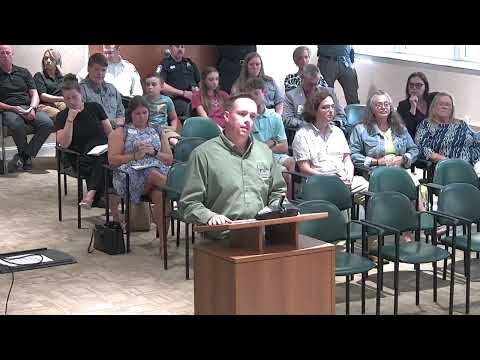
Michael Bowman, executive director of Greenway Public Transportation, presented service metrics and said Greenway operates demand‑response, a flex (loop) route in Morganton, and a same‑day microtransit service. Greenway also provides Medicaid transportation under contract to managed‑care providers. "Demand response being like a paratransit or advanced service," Bowman said, and described the microtransit service as door‑to‑door same‑day rides for $2.50 per trip.
Why it matters: Bowman said federal and state grants typically cover about 50% of operating expenses and that Greenway requests local matches from counties for the remainder. He said the current passenger cost is about $40 per trip and that the flex route and microtransit combined cost roughly $520,000 per year to operate; his standard funding model is roughly 50% grants, 25% Greenway contribution, and 25% from local governments and private partners.
Bowman presented ridership figures showing a sharp change after the system went fare‑free for the flex route in February: monthly ridership rose from 363 to 788 in February and reached 1,115 in May. "Going fare free doubled our ridership for the flex route," he said, and told the commissioners that increasing ridership can increase future grant allocations and allow the agency to expand service.
Bowman outlined planned operational changes supported by automatic passenger counters and a rider app, including converting a single loop into a dual‑loop route to serve more of Morganton and the county outskirts and to improve on‑time performance. He also described microtransit growth after replacing a long flex run to Connelly Springs and Drexel with microtransit; Bowman said ridership on that corridor increased 400% within a year and that Greenway expanded from one microtransit vehicle to three to meet demand.
Questions from commissioners focused on trip purpose and demographics; Bowman said microtransit trip reasons are roughly 50% medical, 20% workforce, and 30% general errands or social trips. He said the agency aims to expand hours to better serve workforce riders and that driver recruitment has improved (from 44 vacancies when he took over to about six current open driver positions).
Board action: The commissioners accepted the report as presented by motion; the vote was recorded as unanimous.
Ending: Bowman said Greenway will pursue technology upgrades, route changes based on automatic passenger count data and continued local match support to maintain fare‑free service on the flex route and to expand microtransit.