Get Full Government Meeting Transcripts, Videos, & Alerts Forever!
Get email alerts on the Emergency Services topic
No spam. Unsubscribe anytime.
Burke County emergency services outlines reorganization, praises multi‑agency response to Grace Heights fire
Summary
EMS Director James Robinson described a departmental reorganization moving emergency management into Emergency Services, outlined search-and-rescue demands and new trail‑marker plans, and credited unified command and regional partners for evacuating and sheltering 91 residents during the July 13 Grace Heights Health and Rehabilitation fire.
Burke County Emergency Services reported a departmental reorganization and an expanded emergency‑response effort Tuesday, and county officials credited unified command and regional partners with evacuating and sheltering 91 residents after the July 13 fire at Grace Heights Health and Rehabilitation.
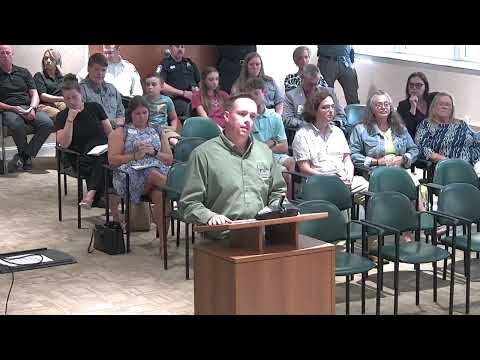
The county’s EMS director, James Robinson, said the county moved emergency management out of the Fire Marshal’s Office and into Emergency Services to align planning and operations with ambulance and special‑operations teams. “We recognized a need for some change and we reacted to a situation,” Robinson said, describing the transfer of staff and functions and the creation of an emergency management manager and planner within Emergency Services.
Robinson told the Board of Commissioners that the county is roughly 150 days into the restructure and that aligning emergency management with EMS supports the county strategic plan’s public‑safety goals. He said staffing changes and training investments — including a paramedic academy run with Western Piedmont Community College — are intended to reduce reliance on volunteers and meet growing response demands in the county’s wilderness and recreation areas.
Why it matters: Robinson said search-and-rescue calls have increased and are resource‑intensive. Burke typically averages 100–125 search‑and‑rescue incidents annually; Robinson said the county’s projection for 2025 is about 200 calls and that overtime for search and rescue will cost the county roughly $202,000 this year (he later said the figure may exceed $300,000 given continued call volume). Many of the incidents occur in federal wilderness land where limited signage and rugged access increase rescue time and complexity.
During his presentation Robinson described the county’s July 13 response to the Grace Heights fire. Unified Command with the City of Morganton organized on‑scene firefighting, rapid evacuation and temporary sheltering operations. Robinson said 20 residents were taken to UNC Blue Ridge as triaged “level red” patients and 71 residents were moved to the Foothills Higher Education Center. “In all, 91 patients were moved in an hour and 53 minutes,” he said, and by about 10 p.m. that night “all patients were ultimately placed in long‑term solutions.”
Robinson credited county staff, city firefighters and neighboring counties for support: “Caldwell, Catawba, McDowell, Cleveland all had units that were staged at our county line,” he said. He also thanked the American Red Cross and local agencies that provided food, water and temporary sheltering logistics. Assistant medical director Brent Curry led patient organization at the shelter, Robinson said.
Search‑and‑rescue and trail markers: Robinson described two recent difficult rescues, including one extrication that took 18 hours and would have been a 36‑hour operation without helicopter support. He said the county is installing blue, geotagged trail signs at trailheads that will be uploaded to SARTopo — a mapping product used by rescue teams — so dispatchers and rescuers can locate hikers more quickly when callers cannot provide precise locations.
Resources and training: Robinson described a 25‑member special operations team that covers urban search and rescue, swiftwater and mountain rescue. He said Burke meets four of five state‑level special‑operations benchmarks and that recruiting younger volunteers remains a challenge as the training curriculum and time required to become a paramedic have increased.
Board action and next steps: Commissioners stood to thank the staff who responded to the Grace Heights incident during Robinson’s remarks. The board accepted Robinson’s report as presented by motion from Commissioner Brown; the vote was recorded as unanimous.
Ending note: Robinson said the county will continue cross‑training, pursue signage and site‑specific planning with federal trail partners, and press for resources and public education to reduce preventable rescues.