Get Full Government Meeting Transcripts, Videos, & Alerts Forever!
Get email alerts on the Waterfront Vision Plan topic
No spam. Unsubscribe anytime.
Residents urge pause on West Linn Waterfront vision plan, citing pond contamination, survey flaws and lack of distribution of public comments
Summary
Several residents and advocacy groups urged the Planning Commission to pause the Waterfront Vision Plan timeline until environmental cleanup and community‑engagement issues are addressed. Staff said the working group recommended moving the plan forward with five provisos and provided a tentative adoption timeline.
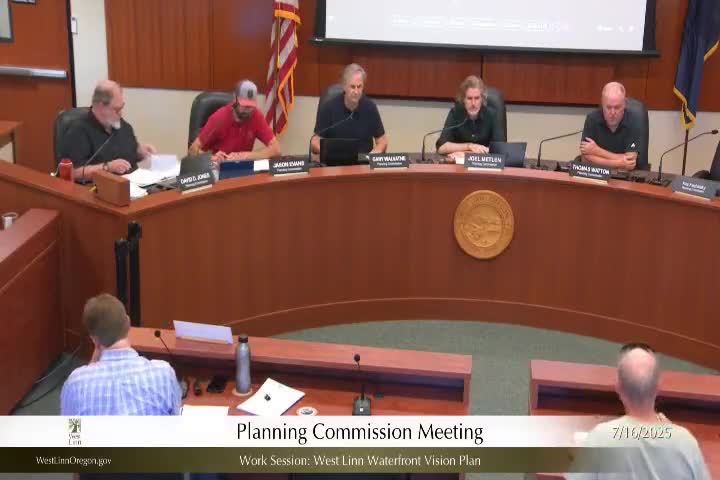
At the July 16 work session the Planning Commission heard public testimony urging a pause or rework of the draft West Linn Waterfront Vision Plan, primarily because of (1) unresolved environmental cleanup at pond sites, (2) perceived flaws in the public survey and distribution of public comments to working group members, and (3) apparent inconsistencies between the draft vision plan and the city’s comprehensive plan in the Ponds District.
Residents called for environmental investigation and remediation to precede further land‑use planning in the wetlands area. Russ Axelrod (former mayor and former planning commissioner) and Terrence Shoemaker (resident) said the Blue Heron pond site had not proceeded from a remedial investigation to a feasibility study and that the site may now show degrading lagoon integrity. Shoemaker said meetings with DEQ and independent observations raised “possible breaching of the lagoon levees by burrowing animals” and urged that “a thorough study of this site and clean up of the toxic waste should be completed prior to any kind of development.” Axelrod asked that public comments be distributed to working group members in accordance with the working group’s guidelines; he said some submitted comments were not provided to the working group.
Public comments also criticized the plan’s engagement instruments: several speakers said the online survey contained double‑barreled questions that combined preservation and development options, and that the engagement summary and draft plan did not clearly reflect the “overwhelming community preference” cited by some respondents to preserve the Ponds District as natural area and to prioritize wetland trails and viewing platforms.
Staff presentation and working group recommendation
Darren Weiss, planning staff, summarized the plan and its multi‑year engagement history. He said the draft plan organizes the waterfront into three planning districts (City Hall District, Cultural Heritage District, and Ponds District), restates guiding principles set in earlier outreach, and includes a market snapshot and mapped concepts. Weiss said the working group reached consensus to move the draft to council with five recommendations: add language addressing affordable housing, consider smart‑growth concepts, emphasize access, prioritize reuse of existing structures, and allow additional time for public feedback. He also noted that one working group member (identified in the record as a property owner) objected and that the Confederated Tribes of the Grand Ronde did not take a position.
Weiss told commissioners the draft plan “was completed in June” and that the next steps include another Planning Commission work session on August 20, a Planning Commission public hearing on September 17, and tentative City Council consideration in November (council work sessions in October and a public hearing on November 10). Weiss also listed public outreach events: open houses on July 24 and July 31 and Farmer’s Market outreach dates.
Environmental and regulatory questions
Multiple speakers pressed for clarity about whether the ponds are a contaminated site requiring DEQ remediation before planning proceeds. Axelrod and Shoemaker described a previous remedial investigation conducted about ten years ago and said the feasibility study and cost evaluation steps did not follow; they recommended DEQ perform a new site assessment and feasibility study. Staff acknowledged the investigative steps taken previously and said the vision plan notes remediation and potential rezoning of pond sites would require additional evaluation.
Willamette Falls Trust and tribes
Speakers noted the Willamette Falls Trust’s role and recent legislative funding referenced in public testimony. Staff confirmed the Trust participated in the working group and that the Trust’s objectives emphasize public access to the falls; specific property acquisitions, priorities and timing were not specified at the meeting.
Public reaction and next steps
Several residents asked the commission to pause the plan schedule and return it for revision later in the year or in 2026 after more outreach and environmental assessment. Weiss said the packet includes an appendix with a comment matrix and engagement summary and encouraged commissioners to submit questions in writing ahead of the August 20 work session so staff could provide responses. The plan will return to the commission for further work on August 20; a public hearing is scheduled for September 17, 2025.