
Regional juvenile detention leaders outline services, seek 'Secure Care' license
Get AI-powered insights, summaries, and transcripts
Subscribe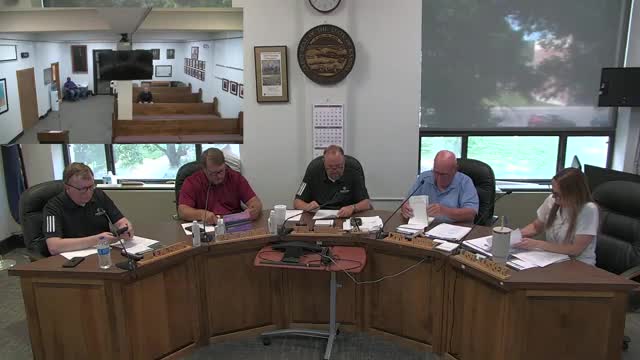
Summary
Mike Walden, director of the Southeast Kansas Regional Juvenile Detention Center, told the Crawford County Commission at its June meeting that the center provides medical, educational and mental‑health services to youths held short term and is seeking a state “Secure Care” license to use otherwise idle beds and generate revenue.
Mike Walden, director of the Southeast Kansas Regional Juvenile Detention Center, told the Crawford County Commission at its June meeting that the center provides medical, educational and mental‑health services to youths held short term and is seeking a state “Secure Care” license to use otherwise idle beds and generate revenue.
Walden said the center, which opened in 1994 under an interlocal agreement serving roughly 10 regional counties, has handled “over 10,000 intakes” and that his most recent count puts the total at about 10,800. He described on‑site medical care that the facility provides through a physician, educational services supplied through Greenbush and the Girard School District, video court access for distant counties and coordinated screening and referrals for mental‑health and substance‑use services.
The proposal for a Secure Care license would let the center house juveniles who need care but are not classified as detention offenders, Walden said. He said the state would pay roughly $325 per bed under the Secure Care arrangement and that the center could potentially generate “up to $540,000 a year,” funds he said would help lower detention fees charged to member counties.
Why it matters: the Secure Care license would let the regional center make fuller use of its capacity, potentially reduce per‑county fees and keep placements and family visits closer to home for families in Southeast Kansas, officials said.
Walden described the facility as a short‑term detention site that also holds youths awaiting placement to the Kansas Juvenile Correctional Complex in Topeka. He said the center’s census on the day of the meeting was 13 youths — eight from the region and five from outside it — and that in past years the facility regularly held larger numbers.
Walden tied recent declines in detention numbers to changes in state law, citing Senate Bill 367 as a reform that reduced detention populations. He also warned that legislation moving through the statehouse could raise detention numbers; he said the House had passed a bill by a large margin and offered the figure “109 to 6,” adding that he might be “a little off on the numbers.”
On federal standards and the need for a separate juvenile facility, Walden cited the Federal Jail Removal Act and related juvenile justice law, saying that placing juveniles in adult jails would violate federal rules and could jeopardize state and federal funding for counties.
Walden said the center already separates Secure Care space from offender detention by locking a corridor added in a 2001 expansion. He described operational details and staffing requirements, including state rules that staff be at least 21 years old and have some college coursework in psychology or sociology so they can serve as mentors and not peers.
The directors invited commissioners to tour the facility; Walden said he planned to meet with the state Department for Children and Families inspector and to take letters of support to Topeka in mid‑July. He also said the center routinely sends monthly financial statements to member counties and seeks board approval for major expenses.
The detention center leaders’ presentation and follow‑up questions occurred during the meeting’s New Business section and were presented by Walden and Cameron Hicks, assistant director of the Southeast Kansas Regional Juvenile Detention Center.
Ending: Walden asked commissioners to consider support for the Secure Care licensing effort and reiterated an open invitation to visit the facility for a tour and to review confidentiality paperwork in advance.