Get Full Government Meeting Transcripts, Videos, & Alerts Forever!
Get email alerts on the Government Finance topic
No spam. Unsubscribe anytime.
City attorney proposes $850,000 lump-sum agreement after post-hurricane billing surge; commissioners ask for contract clarity
Summary
City Attorney Nevin Zimmerman proposed an $850,000 annual lump-sum fee to cover core legal services and create budget certainty, after several years of elevated hourly billing driven by hurricane recovery and special projects.
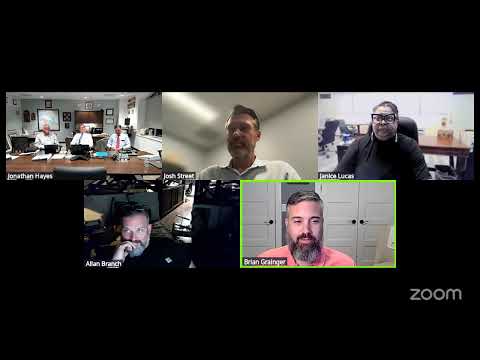
City Attorney Nevin Zimmerman presented a proposed lump-sum billing model to the Panama City Commission during a July virtual workshop, offering an $850,000 annual fee to cover core legal services and to reduce uncertainty after several years of elevated hourly billing.
Zimmerman told commissioners the firm moved to mostly hourly billing in the immediate aftermath of Hurricane Michael because recovery work and special projects dramatically increased legal time and outside specialties. He said firm billings peaked in the 2022 fiscal year at roughly $1.8 million and were about $1.5 million in 2023–24; the city attorney’s office projects about $1.2 million this year. “We proposed a, we would be coming to you with a lump sum fee of $850,000,” Zimmerman said, noting that figure is discounted from historical totals and would include core services with some carve-outs for extraordinary special projects.
Zimmerman, who said he began representing the city in 2013 under a prior arrangement that mixed a lump-sum retainer with hourly charges for extraordinary matters, told the commission that a flat fee provides budget certainty similar to an in-house legal department while keeping access to outside specialists when needed. He said the firm’s hourly rate has not increased since his hiring and that special projects such as bond financing, large public–private partnership agreements or litigation historically have been handled outside the retainer and billed separately.
Commissioners asked how “special projects” would be defined and when the commission would be asked to approve additional fees. Commissioner Street pushed for a bright-line threshold for internal decision-making; Commissioner Granger suggested that invoices under a modest hourly threshold (suggested by some commissioners at the meeting as about 10 hours) be handled inside the lump sum rather than treated as a special project. Zimmerman said those details could be negotiated and that the firm would return with a formal contract that captures covered services and exceptions.
Budget placement and fiscal questions: Commissioners and staff discussed how to reflect the proposed lump-sum fee in the FY2026 budget. City staff noted the $850,000 figure had been tentatively included in budget planning but asked whether the commission wanted the lump-sum amount to be the only legal budget line or whether to include a contingency for special projects. Commissioner Lucas asked whether any shortfall would be covered from reserves if the commission chose not to budget additional funds; staff confirmed any overage beyond an approved lump sum would come from general-fund reserves without separate prior approval.
Context and justification: Zimmerman recapped the post-hurricane period when storm recovery projects, FEMA and grant-related work, procurement and high-volume contract review increased legal hours. He said prior years’ billing included significant special-project charges and that his firm’s proposal is intended to help the city budget predictably while preserving outside-specialist access. “We looked back at what we've billed in the past, looked at the difference between what we think would be the definition of covered services versus special projects or noncovered services and discounted that further,” Zimmerman said.
Process and next steps: Commissioners asked staff to return to budget workshops with a proposed contract draft and to compare the lump-sum approach to alternatives. Several commissioners requested a new, clean contract rather than multiple amendments to the 2013 agreement; Commissioner Hughes suggested the commission negotiate a new contract document that lists covered services and exceptions and removes outdated names and roles. Commissioner Street reminded colleagues that a flat fee can change the dynamic of legal work and urged the commission to set clear thresholds for when special-project approvals are required.
Why it matters: The decision affects general-fund budgeting, potential use of reserves, and whether daily commission inquiries and project work consume hourly time billed outside a fixed price. Commissioners asked for clarity about which legal activities fall inside the proposed lump-sum fee and which would be billed separately as special projects.
Sources: Presentation and discussion with City Attorney Nevin Zimmerman and commissioners during the Panama City Commission virtual workshop (topic introduction and finish in transcript).