Get Full Government Meeting Transcripts, Videos, & Alerts Forever!
Get email alerts on the Mlk Fifteenth Redevelopment topic
No spam. Unsubscribe anytime.
CRA board discusses Sankofa grocery plan for MLK & 15th, property disposition and tools to spur affordable housing
Summary
The Panama City CRA reviewed a Sankofa Group proposal on July 16 for a full‑service grocery and mixed housing at MLK Boulevard and 15th Street and directed staff to continue negotiations while researching funding and disposition options to preserve affordability.
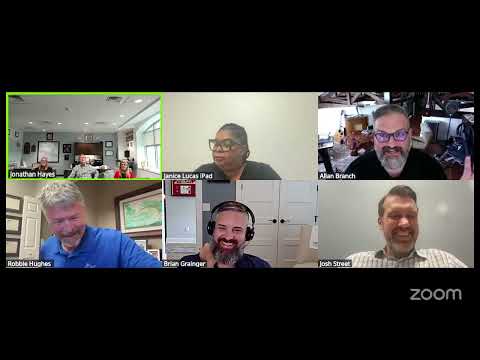
The Panama City Community Redevelopment Agency met July 16 in a virtual workshop to review a proposal from the Sankofa Group for a full‑service grocery at the intersection of Martin Luther King Jr. Boulevard and 15th Street and to discuss a broader plan to transfer and activate city‑owned property for housing and small business development.
The CRA has been pursuing redevelopment for the MLK/15th corner for about 20 years, and the board on April 15 voted 5‑0 to begin negotiations with Sankofa after the group presented a concept that includes a full‑service grocer, 62 rental apartments and 20 townhomes, CRA board member Janice Lucas said. “This redevelopment project has been in the making for 20 years,” Lucas told colleagues during the workshop.
The proposal is still under negotiation, CRA staff said. The developer met with about 60 community members on June 5; attendees raised affordability concerns after the developer gave a rental range of about $1,100 to $1,300 per unit. Lucas and other commissioners stressed that affordability, walkability and community input must be part of the final deal. “My focus is on negotiating for the community…a full service grocery store, affordable housing, real economic development opportunities,” Lucas said.
Discussion points and context - Planning history: Commissioners and staff traced the MLK/15th effort through prior plans (including a post‑Hurricane Michael Dover plan and a 2004 steering‑committee study) and a May 2024 Retail Strategies engagement to attract retail and mixed‑use development. - Competing proposals: CRA staff said an earlier unsolicited Amarin Group concept included a gas station, 120 apartments and townhomes; that proposal was discussed but not formally submitted. Amarin representative Patty Sunday later urged rebidding and raised gentrification concerns at a community meeting, staff reported. - Community concerns: Residents and stakeholders have raised worries about rising rents and displacement. Lucas and staff emphasized use of existing incentives — staff referred to tax increment financing (TIF) and other CRA incentives already on the table — and planned outreach and equity protections. - Funding and feasibility: Commissioners asked staff to inventory capital sources that could be layered to lower household costs, including HUD and state programs, locally held housing funds, and other grants. Commissioner Josh Street urged staff to identify funding sources that are either available now or close to deadline so they can be bundled to “stack” into a deal that reduces rents and operating costs for the grocery and housing components.
Staff direction and next steps - Staff reported they have been meeting biweekly with the Sankofa team and are negotiating terms; the agreement was described as near completion but not finalized. - Commissioners asked staff to analyze and present funding options (housing grants, locally held program dollars, HUD/SHIP resources) that could be combined to improve affordability and reduce the developer’s financing gap. - Board members asked staff to consider assistance that would be conditional on developers passing affordability along to tenants (for example, requirements tied to incentive receipts) and to explore support from the Florida Housing Coalition and the Incremental Development Alliance for technical assistance and capacity building in Glenwood.
City land and disposition policy discussion Commissioners shifted to a broader question of how to move city‑owned lots into productive use. Staff reported receiving multiple letters of intent (LOIs) for CRA parcels and that many city‑owned lots are encumbered by past housing program restrictions (for example SHIP or other programmatic deed restrictions), which limit immediate transfer without reimbursement or legal action. Jonathan Mount (staff) said the typical first step is an appraisal and review of encumbrances, then bringing recommended transfers to the board or city commission for direction.
Several commissioners advocated faster, targeted transfers for small residential lots to local builders or community developers. Commissioner Street urged splitting residential parcels and clearing title so small builders could build affordable homes, saying “we have more property than any other municipality our size in the state” and that activating lots should be a priority. Commissioners discussed creating a simple, rapid pathway — including rotating real‑estate advisors to pull comps instead of waiting on full appraisals — and using CRA funding to cover permitting or impact fees where allowed.
Policy safeguards and anti‑displacement measures Board members asked staff to consider deed‑restriction mechanisms that preserve long‑term affordability, such as lien periods or community land trust arrangements, and to ensure appraisals and sale processes do not unintentionally produce speculation. Lucas told colleagues the CRA will emphasize equity and community input in negotiations and mentioned workshops from the Incremental Development Alliance that will start Sept. 4 to train local landowners and small developers.
What was decided No final contract or sale was approved at the July 16 workshop. The board reaffirmed direction to staff to continue negotiations with Sankofa, to research and present available funding options that can be combined to reduce rents and support the project, and to prioritize review of LOIs and the disposition pathway for unencumbered CRA parcels. Staff said it will obtain appraisals and prepare findings for upcoming meetings.
Why it matters The MLK/15th corner has been a priority redevelopment site for two decades and is seen by CRA staff and members as a place to address a local food‑access gap, add walkable retail, and increase housing supply. How the CRA structures incentives, deed restrictions and parcel transfers will directly affect whether new development preserves affordability or contributes to displacement.
What to watch next Staff said they will return with funding‑stack options, a status report on encumbrances for specific lots with LOIs, and a draft term sheet for the Sankofa negotiations at forthcoming CRA or city meetings.
Ending note The CRA did not vote on financing commitments at the July 16 workshop. Commissioners asked for more detailed financial options and legal review of parcel encumbrances before any sale, donation or funding commitment is considered.