Get Full Government Meeting Transcripts, Videos, & Alerts Forever!
Get email alerts on the Municipal Grocery Tax topic
No spam. Unsubscribe anytime.
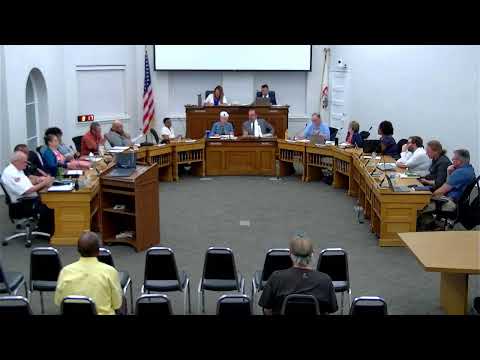
Freeport council approves 1% municipal grocery tax amid 5-3 split
Summary
The Freeport City Council approved a 1% municipal grocery retailers and service occupation tax on second reading after debate over fairness and impact; the ordinance passed 5–3.
Freeport’s City Council voted 5–3 to adopt an ordinance allowing a 1% municipal grocery retailers occupation tax and a matching municipal grocery service occupation tax.
Manager Boyer told the council staff’s recommendation was to move forward with a 1% grocery tax and noted that dozens of Illinois communities have enacted similar local grocery levies. “371 communities in Illinois have already passed it,” Boyer said during the council discussion.
The measure drew sharp opposition from several aldermen during the roll call. Alderman Stacy said she was “absolutely not” in favor during the vote; Alderman Sanders and Alderman Simmons also voted no. The aye votes were recorded from Alderman Parker, Alderman Shadle, Alderman Sellers, Alderman Clem and Alderman Johnson. The ordinance passed, 5–3.
Why it matters: council members and staff described the tax as a potential revenue source to replace state-collected funds the city previously received. During discussion, opponents framed the change as a burden on residents and local retailers; supporters and staff argued it restores local revenue streams the state no longer distributes.
The ordinance moved on second reading and, per the council action, will become effective according to the timeframe in the adopted ordinance and state law. The council did not amend the ordinance on the floor; the final implementation schedule and administrative rules for collection were not specified during the meeting.
What remained unresolved at the meeting: council members pressed staff for details on how the revenue would be used and for additional analysis of impacts on consumers and small grocers. Manager Boyer’s presentation referenced annual receipts the city has seen historically but the council did not provide a new line-item budget allocation on the floor.
Ending note: the tax now joins a growing list of Illinois municipalities that collect a local grocery tax; the city will follow state procedures for local implementation and administration.