Get Full Government Meeting Transcripts, Videos, & Alerts Forever!
Get email alerts on the School Budget topic
No spam. Unsubscribe anytime.
Brandon Valley School District proposes roughly $72 million 2025-26 budget; special‑education fund flagged as fragile
Summary
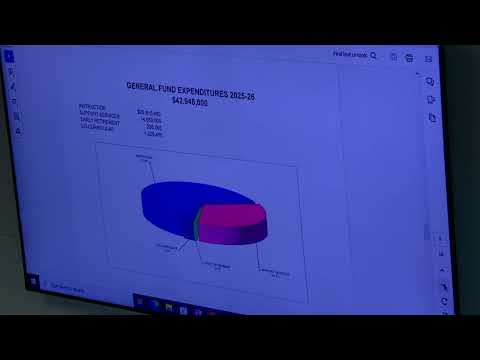
Business Manager Lundberg presented the Brandon Valley School District 49-2 proposed budget for fiscal 2025-26 at the district’s annual budget hearing, outlining roughly $72 million in total revenues and a general fund appropriation of $42,948,000.
Business Manager Lundberg presented the Brandon Valley School District 49-2 proposed budget for fiscal 2025-26 at the district’s annual budget hearing, outlining roughly $72 million in total revenues and a general fund appropriation of $42,948,000.
Lede: Lundberg told the school board the proposed budget “meets all the needs and provides a robust education experience” while maintaining a 2.5% salary increase plus benefits for staff, and he said the district will complete a new elementary school and an addition to the middle school within current mill levies.
Nut graf: The presentation balanced near‑term investments in staff and facilities with warnings about a fragile special‑education fund and an ongoing, multi‑year revenue effect from state legislation. Lundberg said the district’s fund‑balance policy and a strong bond rating help preserve financial stability, but he urged caution because special‑education reserves remain small and certain state changes will reduce short‑term revenue growth.
The board was shown fund appropriations and projected year‑end balances. Lundberg listed appropriations for 2025‑26 as: general fund $42,948,000; Capital Outlay Fund $8,910,000 (an increase he later showed as $10,265,000 on a slide described as mostly local revenue); Special Education Fund $11,152,000; Bond Redemption Fund $3,400,000; and Food Service $4,113,000. He said total revenue for all funds would be about $71,907,000 and total expenditures about $70,563,000.
Lundberg described projected ending fund balances for 2024‑25 and estimates for the end of 2025‑26: general fund about $8,900,000 (roughly 22% of expenditures), Capital Outlay about $6,147,000, Special Education about $865,000 (about 8% of that fund’s expenditures), Bond Redemption about $1,400,000, and Food Service about $1,673,000.
On central revenue sources, Lundberg said roughly 55% of general fund revenue comes from state sources and about 36% from local sources; federal funds are a small share (about 1.2% of the general fund), which he said limits exposure to current freezes of some federal dollars. He noted one line item of roughly $350,000 in investment income driven by higher short‑term yields on certificates of deposit and a money‑market vehicle used for liquid public funds.
Expenditures and personnel: Lundberg said salaries and benefits remain the largest cost category, and that 75.5% of total district salaries are paid to teachers and educational assistants who work directly with students. He attributed roughly half of the district’s $2,000,000 increase in general‑fund expenditures to salary and benefit changes and noted $725,000 in costs for additional staff.
Capital and debt: Lundberg reported $30 million in recently issued debt for construction — about $23 million for the new elementary school and $7 million for a middle‑school addition — and said debt service represents about 26% of capital outlay expenditures next year. He described the district’s bond rating as strong.
Special education: Lundberg said the district “stopped the bleeding temporarily” in the special‑education fund after a task force led by a staff member named Jared, but cautioned the fund remains delicate: a small swing in costs could quickly reduce the fund balance. He said the district deferred a $100,000 speech‑language hire and saw lower than budgeted enrollment in one contracted placement (TeachWell), which improved the year‑end result compared with projection.
Policy and external impacts: Lundberg warned that Senate Bill 216 (as referenced in the presentation) will limit future revenue growth tied to taxable valuation increases, reducing what he estimated as roughly $250,000–$300,000 a year for about five years compared with what the district would otherwise receive. He said that compounding effect will reduce funds available for long‑range planning.
Next steps: Lundberg told the board the district will place the 2025‑26 budget and associated tax asking on the board’s approval list later in the agenda. No formal board vote on the budget was recorded during the hearing portion of the transcript.
Ending: Board members at the hearing thanked Lundberg and his office for the multi‑month preparation. Lundberg invited board members to direct any follow‑up questions to him before the scheduled approval action later in the meeting.