Get Full Government Meeting Transcripts, Videos, & Alerts Forever!
Get email alerts on the County Budget Deficit topic
No spam. Unsubscribe anytime.
Spokane County officials warn of $20 million shortfall, outline limited revenue options
Summary
County commissioners and staff told department leaders that Spokane County faces a projected $20 million structural gap for next year that could grow to roughly $70 million by 2030; they reviewed limited revenue tools, reserve constraints and potential impacts on services.
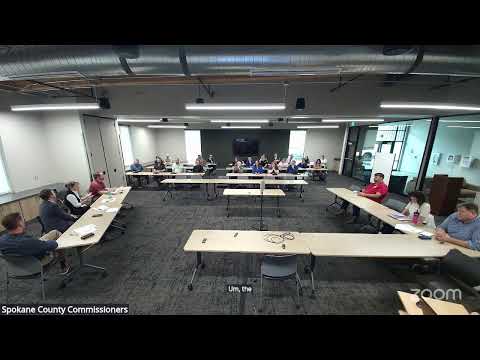
Spokane County commissioners told department heads July 21 that projected revenues will leave the county with about a $20,000,000 deficit for fiscal 2026 and a longer-term structural gap that could approach $70,000,000 by 2030.
The gap, commissioners and staff said, results from flat sales and property tax growth, rising labor and benefits costs and uncertainty in state and federal funding. "We are looking at a $20,000,000 deficit, you know, as we projected out for for next year," one commissioner said during the strategic planning meeting.
Why it matters: commissioners must by law adopt a balanced budget and have limited local tools to make up large, recurring shortfalls. Staff urged early planning so departments can identify one-time and ongoing options before the December budget adoption deadline.
County staff presented the main revenue options available to the board: a 1% general-fund property tax increase (estimated at about $700,000 for next year), use of the county's "banked" levy capacity, a road-levy shift that could generate up to about $7,500,000, and a newly authorized council-initiated sales tax option.
Staff noted limitations for each option. The 1% property tax increase would be modest relative to the shortfall; the road-levy shift historically is treated as capital or road fund money rather than ongoing general-fund support; and a new county-level sales tax allowed by recent state legislation would require a majority vote of the commissioners, be limited in eligible uses (discussed as criminal-justice-related in the meeting) and still likely fall short of removing the structural gap. "It only can go towards criminal justice purposes," a staff presenter said about the council-initiated sales tax authority.
Reserves and capital needs: staff reminded attendees that not all reserves are available to plug operating gaps. The county reported about $32,000,000 in unassigned/unrestricted reserves but also has a roughly $35,000,000 campus infrastructure project already underway plus additional capital needs (auditor and enterprise system replacements, sheriff vehicles and other one-time needs) staff estimated at roughly another $8,000 to $11,000,000 beyond the campus project. Staff cautioned that the county's reserve policy generally limits reserve use to one-time purposes and that drawing down reserves for ongoing operations can harm creditworthiness.
Next steps and board direction: departments were directed to prepare budget submissions that meet assigned targets, document the service-level implications of proposed reductions, and prioritize requests so the commissioners can weigh trade-offs across about 25 general-fund departments during August and into October and November deliberations. Staff also flagged federal grant uncertainty that could put specific positions at risk in emergency management and other programs.
The board did not take any formal votes at the meeting; staff said formal policy decisions and any tax or levy changes would require separate board action.
Ending: County leaders asked department managers to pursue cost-saving ideas and grant opportunities, and to return detailed, prioritized budget packages for commissioner review before the December budget adoption.