Get Full Government Meeting Transcripts, Videos, & Alerts Forever!
Get email alerts on the Emergency Management topic
No spam. Unsubscribe anytime.
Spokane County emergency management warns of major shortfall after federal grants frozen
Summary
County emergency management leaders told commissioners they face immediate staffing and program risks after the federal government froze 2025 EMPG and SHSP funds and the City of Spokane ended its contract for shared services.
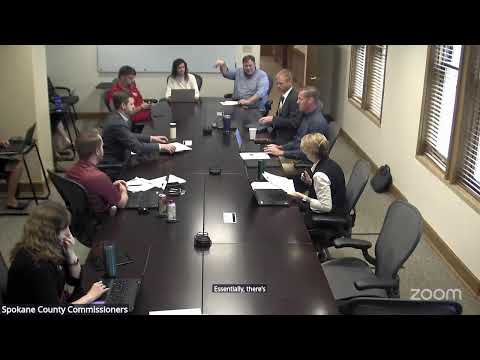
Chandra, an emergency management staff member for Spokane County, told the Board of County Commissioners on July 21 that the county faces an immediate budget shortfall after the Department of Homeland Security did not disperse 2025 Emergency Management Performance Grant (EMPG) and State Homeland Security Program (SHSP) funds.
The county’s emergency program provides preparedness, response, recovery and mitigation services under Washington law; staff warned that losing federal grant revenue and a municipal contract creates gaps the county will struggle to cover without cuts or new local funding.
Why it matters: The county’s emergency management program is responsible for statutorily required functions under Washington law and for coordinating countywide response and recovery. Emergency managers said their programs are heavily dependent on federal grant funds and on the city’s previous contract contribution; with the city no longer paying and federal grant payments frozen, staff said key positions and operations are at risk.
Chandra said the county’s existing annual EMPG award has averaged about $278,367 over the last 10 years and supports two full-time positions plus public education, translation, communications, training and equipment. She said the county currently is operating under a 2024 EMPG performance period that runs through Nov. 30, 2025; the 2025 contract was not issued and those funds are effectively gone.
Chandra emphasized that county emergency functions are required by RCW 38.52 and must cover mitigation, preparedness, response and recovery. She said the county historically built a tiered system — local municipalities first, county second, state third, then federal — and that the current freeze and internal changes at FEMA are shifting more responsibility to state and local governments.
County officials told commissioners they maintain seven staff positions in emergency management, including two positions funded by federal grants. Chandra said one of the federally funded positions is an operations coordinator (intended to be the emergency operations center manager) and the other is a program specialist who manages training, exercises, the animal response program and public education outreach.
Commissioners and staff discussed timelines and legal context. Chandra said the federal freeze of funds began in late winter when the Administration impounded some Department of Homeland Security grants; she described uncertainty about national litigation and contracting changes tied to new DHS contract terms (including ICE and DEI language) but said she could not predict when or whether those funds would be reinstated.
Budget impact and near-term choices: County staff said the immediate effect is a roughly $270,000–$280,000 shortfall as the county heads into the 2026 budget year if federal EMPG funds are not restored. Chandra and county budget staff noted the City of Spokane previously contributed roughly $192,000 toward the county’s emergency services; the city’s withdrawal of the interlocal agreement means the city must provide its own services and no longer pays the county for those functions.
Chandra and the sheriff’s office told the commissioners that emergency response demands have already strained staff during recent fires and that the program has “very little fat” to cut without reducing core capabilities. She said emergency management maintains a 24/7 duty-officer rotation and that fewer staff would increase the frequency and stress of on-call duties.
Next steps and direction: Chandra said she will return to the commission with an update on Aug. 12 on the county’s hazard mitigation plan and risk ranking. Commissioners directed staff to include emergency-management funding and service-level trade-offs in upcoming budget discussions and to consider advocacy to federal and state delegations to restore or stabilize grant funding.
Ending: County emergency management staff concluded their presentation asking the commission to weigh how much program reduction the community is willing to accept, stressing that statutory responsibilities do not change even if funding does.
Speakers quoted in this article are limited to the listed speaker roster below.