Get Full Government Meeting Transcripts, Videos, & Alerts Forever!
Get email alerts on the Birth To 3 Services topic
No spam. Unsubscribe anytime.
Walworth County committees vote to keep Birth-to-3 therapists as county employees
Summary
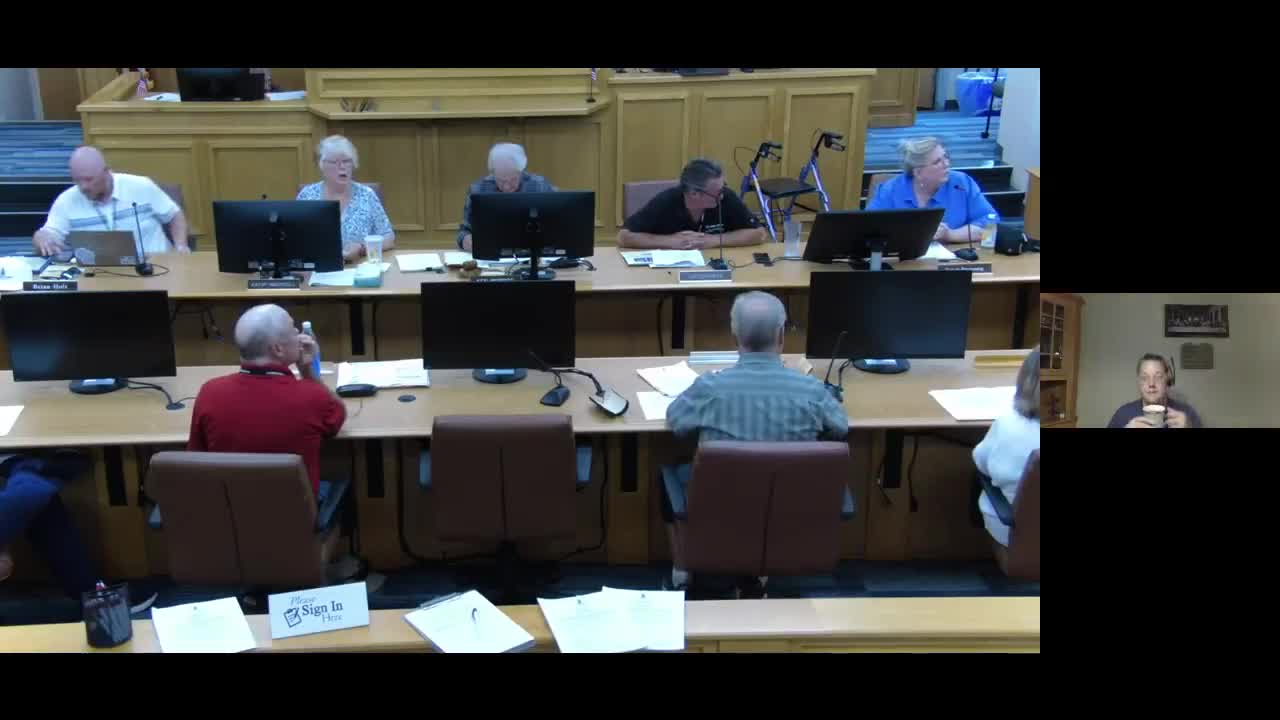
After public testimony from therapists and parents and debate about budget and staffing risks, the county Human Resources Committee and the Health & Human Services Board voted to recommend keeping the Birth-to-3 therapists as Walworth County employees rather than contracting the service.
Walworth County Human Resources Committee and the Health & Human Services Board voted to keep the county'employed Birth-to-3 therapists in their current employment model rather than move the program to an outside contractor, following extended public comment from program staff and families and committee discussion of budget and staffing risks.
The decision came after several county-employed therapists and parents described continuity of care, home-based services and benefits tied to county employment, and after county staff presented budget figures and a proposed contractor model.
County-employed therapists and program staff told committee members the current model supports continuity and close interdepartmental collaboration. Carlene Liberto, a speech-language pathologist, told the committees, "our program has worked for 20 plus years, and the 4 of us desire to continue working for this program, community, and county." Jeanne Luedke, an occupational therapist, said county employment "improves consistency and stability for families" and noted therapists coordinate directly with public health and social services. Paige Lancaster Bozell, an early childhood special educator, said the program "meets requirements" in the most recent state determination and called a claim in the staff memo about vendor improvements "misleading."
Parents and caregivers also urged the board not to change the structure. A parent, identified in the record as Taylor Skaggs, described home-based therapy as essential for a child with complex needs and said the in-home model and the same team visiting week to week "made all the difference." Another parent, Melissa Blauser, said long-term relationships with the therapists helped her children progress.
County staff presented the rationale for considering a contracted model, citing what they called "structural vulnerability," administrative burdens, and the potential to access a broader pool of therapists and billing networks. The staff presentation said a vendor could provide in-network billing and administrative capacity and cited contacts with several counties where a hybrid or contracted model operates. The memorandum cited a recent program status determination covering 07/01/2023 to 06/30/2024 showing Walworth County "meets requirements."
County staff also gave preliminary budget figures for the trade-off: the memo and committee discussion cited an estimated $170,000 in first-year savings for a contracted model in 2026 and "at least $100,000" in subsequent years, while county staffing and benefit costs to maintain current service levels were described in committee remarks as roughly "three-quarters of a million dollars" to preserve 2026 service at 2025 levels. Carlo (department head), who presented the proposal for budget planning, said the contractor had pledged to match hourly rates but that benefits would differ and that mileage reimbursement and retirement benefits would change for staff under a contract.
The Human Resources Committee voted on a motion to recommend keeping the current county-employed model; the committee motion was made and seconded and the outcome was recorded as in favor, with the motion carrying. The Health & Human Services Board took a separate motion and likewise voted to keep the program structure as-is for now while staff continue budget work. Both committees emphasized this action was to provide input for 2026 budget development rather than to permanently close off future configuration options.
Discussion during both committees noted trade-offs: proponents stressed continuity, in-home delivery and staff retention tied to county benefits (including access to fleet vehicles and the Wisconsin Retirement System); others stressed long-term fiscal pressures, administrative burden and the potential for a vendor to provide coverage during long staff absences or to achieve in-network billing advantages. Committee members asked staff to return with additional information if the vendor's capacity for home-based services, reimbursement details and projected savings could be clarified.
What happens next: the committee recommendations will inform the county administrator's 2026 budget proposals. County staff said any final decision about contracting would be part of the formal budget process and could be revisited if fiscal circumstances or staffing changes warrant it.