Get Full Government Meeting Transcripts, Videos, & Alerts Forever!
Get email alerts on the Public Safety topic
No spam. Unsubscribe anytime.
Show Low mayor, police chief highlight community policing, AI, drones and regional dispatch expansion
Summary
Mayor John Leach Jr. and Chief Brad Provost discussed the Show Low Police Department’s community-oriented policing initiatives, new technology including AI-assisted report writing and a drone first-responder program, and the regional dispatch center that now serves multiple agencies across thousands of square miles.
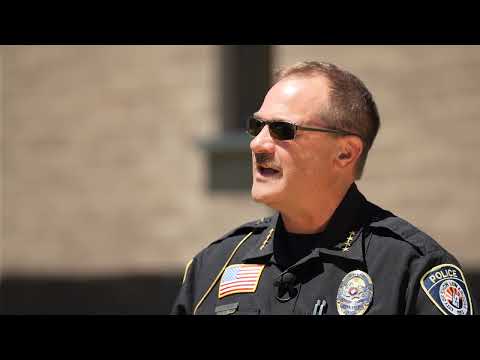
Show Low Mayor John Leach Jr. and Police Chief Brad Provost used a city radio program to describe recent changes in local policing that officials say emphasize community-oriented work, technology adoption and regional cooperation. "One thing we have focused on over the last couple of years has been community oriented government," said Chief Brad Provost. "We're doing that bringing AI in for our report writing."
Why it matters: Officials said the changes are intended to reduce unnecessary responses, free officer time for problem solving and strengthen mutual aid across neighboring jurisdictions. Provost credited the city council with providing funds to add positions such as a police analyst, a community action officer and a public information officer to support preventive work. "We added things like a police analyst, community action officer, public information officer... and started finding the things that are causing problems in our community," he said.
Chief Provost described multiple technology and equipment initiatives in place or rolling out. He said the department is using AI tools to cut report-writing time, and has launched a "drone as a first responder program," which he said "within about 84 seconds, we'll have eyes over that scene." He also listed newer less-lethal options for officers, including tasers, pepper ball and "bolo wraps" for safely restraining and transporting people.
Officials also emphasized interagency cooperation on investigations and emergency response. Provost said the department co-locates investigations and community services with Navajo County and participates in multi-agency teams including a special response team, a homicide task force and a major incident team. He said that cooperation and preventive work contributed last year to a 15% reduction in calls for service and "what that relates to in dollars is it reduced staffing by over $200,000 of calls that we didn't have to go answer."
Dispatch services were another focus. Provost said Show Low operates a regional dispatch center that currently serves three police departments and five fire districts across "anywhere from 3 to 4,000 square miles," and that two more police departments and several additional fire districts are considering joining. He said the center provides emergency medical dispatching that can begin care guidance when a call is first answered, and fire dispatching that helps prepare scenes for arriving firefighters.
Both speakers framed the changes as local investments in community safety and officer well-being; Provost said many department employees "have grew up here" and have family ties to the area. No formal policy votes or budget approvals were taken on air during the interview.
Looking ahead, Provost said the department is continuing to expand partnerships and technology use but provided no timetable for full implementation or details on procurement or privacy safeguards for AI and drones. "I want them to know what a fantastic community this is and the fine people they have working here," he said. "This is our community. We wanna be safe."