
Sheriff’s co-responder deputies report daytime workload and follow-up successes; tablets and virtual assessments coming
Get AI-powered insights, summaries, and transcripts
Subscribe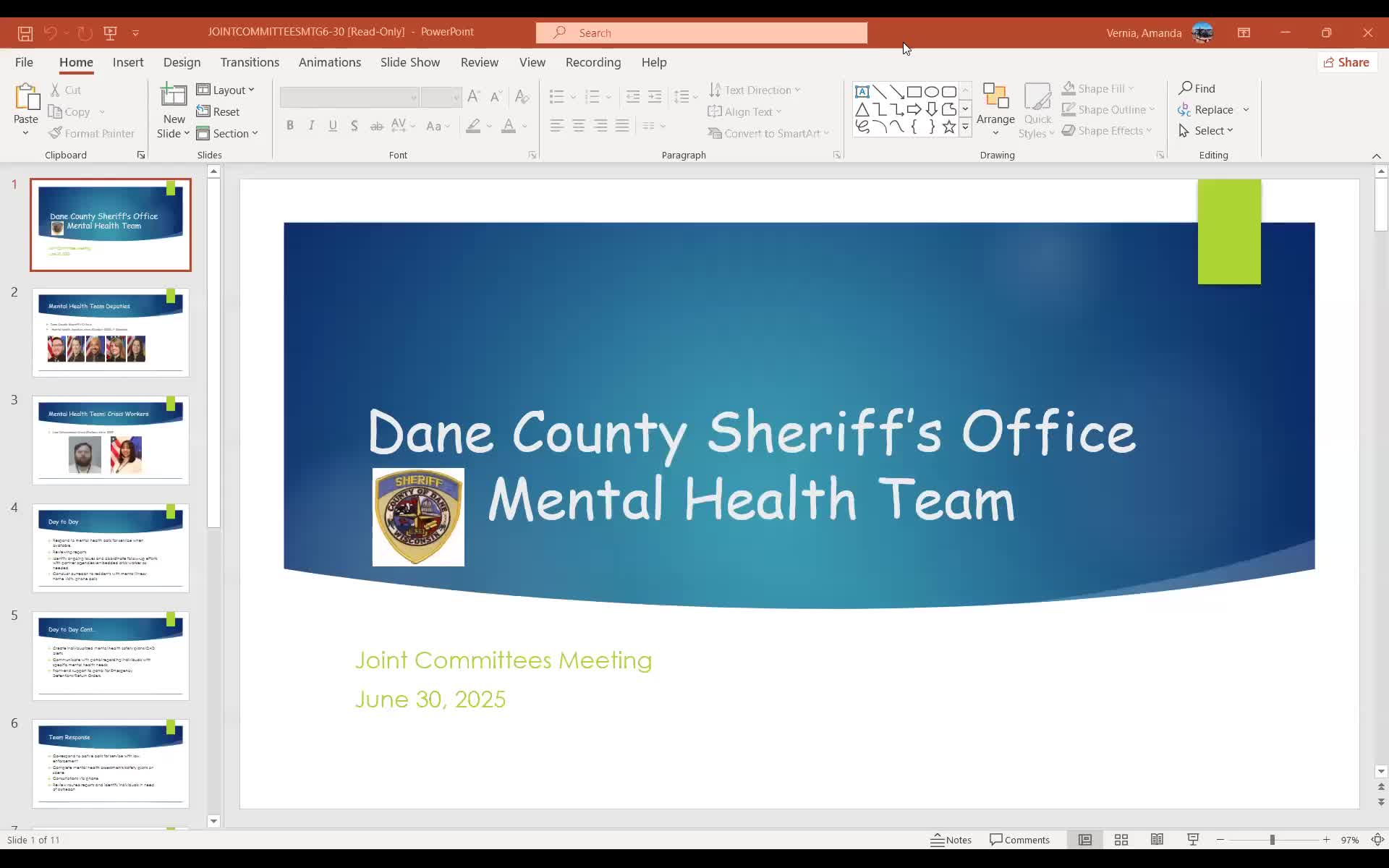
Summary
Dane County mental health deputies and their embedded clinicians described a co-responder model on June 30 that emphasizes on-scene assessment, rapport-building and follow-up to reduce repeat calls and avoid unnecessary emergency transports.
Dane County mental health deputies and their embedded clinicians described a co-responder model on June 30 that emphasizes on-scene assessment, rapport-building and follow-up to reduce repeat calls and avoid unnecessary emergency transports.
Deputy Leslie Fox, who spoke for the Dane County Sheriff’s Office team, said the county formally added four mental-health deputies in October 2022. The office also has law-enforcement-embedded crisis workers in place since 2019, and the combined teams split coverage across precincts to match higher daytime call volumes.
Fox told committee members that deputies prioritize active calls for service but use downtime for proactive work such as welfare checks, home visits, development of individualized response plans and follow-up contact. Those response plans include scripting for family members and caregivers, contact lists and de-escalation notes intended to reduce crisis escalation when 911 is called.
Deputy Fox described several success stories shared with the committee: one older adult new to the county who had frequent calls for service was gradually connected to mental-health care and, after transportation to an intake appointment, stabilized on medication; another involved a six-year-old with suicidal and homicidal ideation where the co-responder team coordinated with the family and the case manager to create a safety plan and reduce immediate risk.
The Sheriff’s Office provided operational details: four mental-health deputies are assigned across precincts (two at the West Precinct, one at Southeast, one at Northeast); embedded clinicians were scheduled to provide weekday coverage designed to hit midday high-volume periods. Fox said the busiest days were Tuesday through Thursday and that highest demand was midday, not weekends or overnight.
County and sheriff staff also discussed remote-assessment technology. A law enforcement virtual assessment grant funded equipment, planning, training and staffing for on-scene virtual assessments; the Sheriff’s Office purchased 44 tablets so officers can connect with Journey clinicians for a visual assessment rather than phone-only contact. Lieutenant Chris Moore described the tablet project as a tool to “fill and bridge some of the gap” when embedded clinicians are not available and to reduce transports to emergency rooms.
Committee members asked about data collection and whether deputies track how often calls result in transport or placement; staff said internal logs capture response activity but that some transport outcome tracking would require additional pulls from their information systems. Fox said Journey could provide numbers on emergency detentions and transports when requested.
Sheriff’s Office staff emphasized the co-responder model’s focus on keeping patrol available for other calls by having mental-health deputies and clinicians take lead on incidents when appropriate, and on building trusting relationships so that, if a crisis recurs, responders are familiar to households and de-escalation is easier.
No formal decisions were taken; staff said they will continue refining data collection and workflows and will report back as tablet-based assessments and virtual workflows are implemented.