
President signs Genius Act to create federal framework for dollar-backed stablecoins
Get AI-powered insights, summaries, and transcripts
Subscribe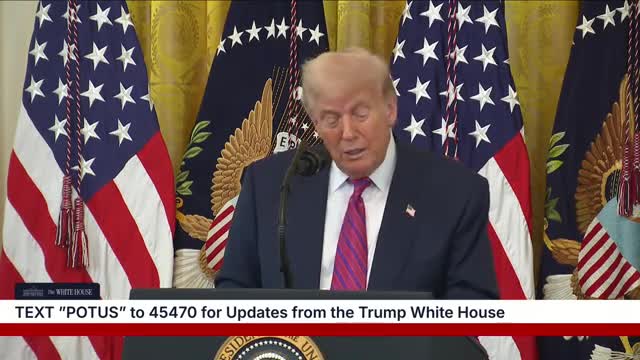
Summary
President Donald J. Trump signed the Genius Act at a White House ceremony, saying the law creates a regulatory framework for dollar‑backed stablecoins, updates payment rails and will boost demand for U.S. Treasury securities.
President Donald J. Trump signed the Genius Act at a White House ceremony, saying the law creates a regulatory framework for dollar‑backed stablecoins, updates payment rails and will boost demand for U.S. Treasury securities.
"This afternoon, we take a giant step to cement the American dominance of global finance and crypto technology as we sign the landmark Genius Act into law," President Trump said at the event, which included industry executives and administration officials.
The administration described the law as establishing "clear and simple" rules for issuing crypto assets backed 1:1 with U.S. dollars, Treasury bills and other cash equivalents and said that the changes will speed payments and lower costs. "The Genius Act provides banks, businesses, and financial institutions a framework for issuing crypto assets back 1 for 1 with real US dollars, treasury bills, and other cash equivalents," Trump said.
David Sachs, identified at the event as White House AI and Cryptos, told attendees the measure "will unlock American dominance in the crypto industry" and pledged that stablecoins issued under the new framework will be fully backed by traditional dollar‑denominated assets. Sachs also credited the White House and congressional supporters for advancing the legislation.
Trump and administration speakers linked the law to broader policy steps they described the administration has taken for digital assets, including a prior executive order establishing a U.S. strategic Bitcoin reserve and an earlier pledge and executive order to ban a central‑bank digital currency (CBDC) in the United States. At the ceremony, Trump said he intends to sign additional legislation to codify the CBDC ban into permanent law.
The president and speakers emphasized economic and geopolitical benefits, saying stablecoins could reduce transaction times from days to seconds and increase global demand for U.S. Treasury securities. Trump said the law would make "the dollar look really good and strong and powerful" and argued it would preserve U.S. monetary prominence.
The signing drew leaders from crypto companies and financial firms who were acknowledged from the stage, including executives from Coinbase, Kraken, Circle, Tether, Visa, Rumble, Robinhood and Gemini. The event also included senators and representatives the president thanked by name for supporting the bill.
The administration framed the law as both a modernization of payment systems and a tool to strengthen the dollar; statements at the event attributed future economic effects — such as lower interest rates or ‘‘trillions of dollars’’ of new demand for Treasuries — to the law, but the ceremony did not include independent analysis or implementation dates for those outcomes.
The White House also listed prior and parallel actions at the event, including personnel decisions at the Securities and Exchange Commission and the creation of a presidential working group on digital assets. The ceremony included a short address by David Sachs and acknowledgments of the law’s congressional supporters.
The signing completes an executive and legislative push described at the event; the transcript does not specify the bill’s statutory citation, implementation timeline, or details of prudential or consumer‑protection rules that will govern issuers. Those specifics were not provided in the ceremony remarks.
Aides and officials at the event were asked to join the president onstage to witness the signing; the transcript records the president inviting lawmakers and industry leaders to come forward before the signing.
(For clarity: the transcript of the ceremony supplied the quoted material and the list of attendees; it did not provide the statute number, effective dates for the law, nor detailed regulatory text.)