Get Full Government Meeting Transcripts, Videos, & Alerts Forever!
Get email alerts on the Solid Waste topic
No spam. Unsubscribe anytime.
Council gives first reading to residential solid‑waste franchise ordinance and accepts state grants for waste programs
Summary
At first reading, Lexington County announced ordinance 25‑13 approving residential solid waste franchise contracts for service areas 2, 3, 6 and 7 and the council voted to accept three state grants totaling about $276,147 to support tire recycling, used‑oil disposal and recycling education
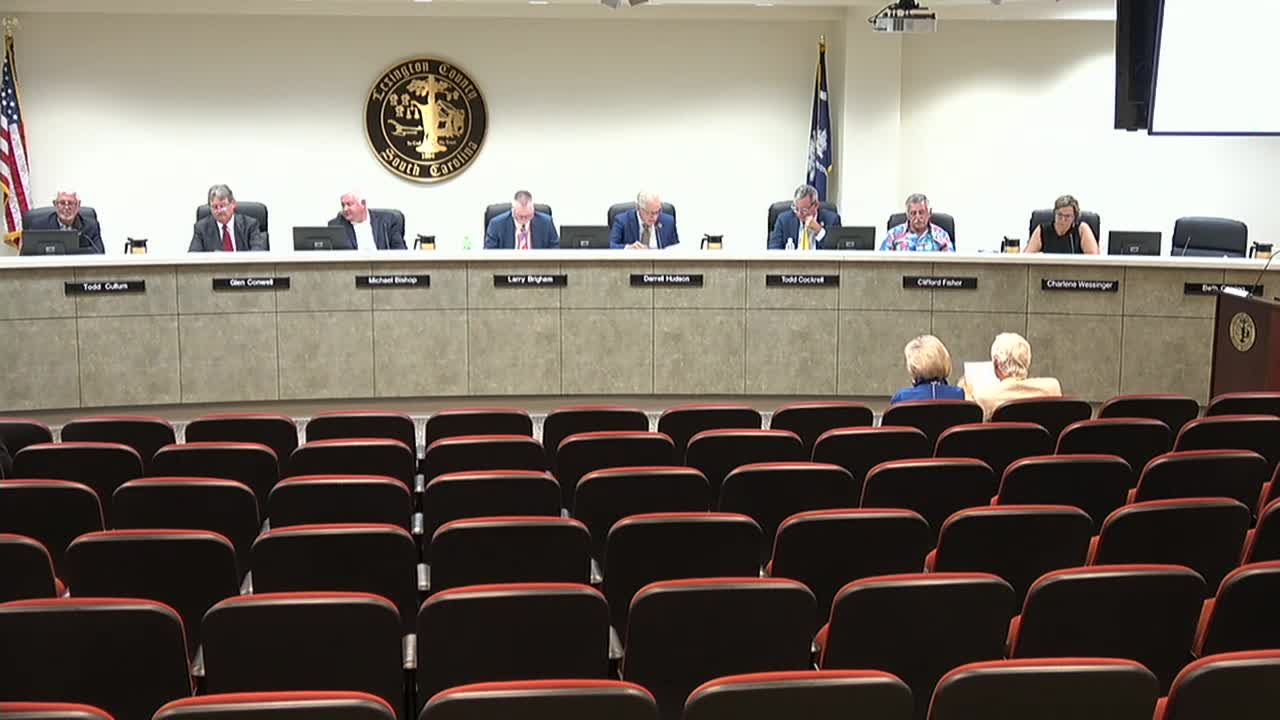
Lexington County Council gave first reading by title to Ordinance 25‑13 on July 15, an ordinance approving residential solid waste franchise contracts for service areas 2, 3, 6 and 7. The ordinance was announced to the public at first reading and advanced for further consideration.
Separately, the council accepted several state grant awards to support solid‑waste operations. Councilman Hudson, reporting from the Public Works and Solid Waste Management Committee, said the county will accept a South Carolina Department of Environmental Services tire‑grant award for $240,406 to help cover contractor costs for processing and recycling collected tires; a used‑oil grant award for $20,991 to support promotion and materials for proper oil disposal (including $750 for staff professional development); and a solid‑waste education grant for $15,750 to promote recycling education in the county. After committee discussion, council voted unanimously to accept each award.
Council officials said the tire grant will cover a shortfall in contractor costs calculated through the county’s tire fee worksheet, the used‑oil grant will fund outreach and supplies as Lexington grows, and the education grant will support increased recycling promotion. The first‑reading vote on the franchise ordinance and the grant acceptances were recorded without dissension.
These actions put the county in position to finalize franchise contracts for residential service zones after subsequent readings and to spend the grant funds on contractor payments, outreach and staff training as allowed by the grant terms.