
Lexington County Council advances multiple zoning and land‑use measures amid debate over 'pending ordinance' status
Get AI-powered insights, summaries, and transcripts
Subscribe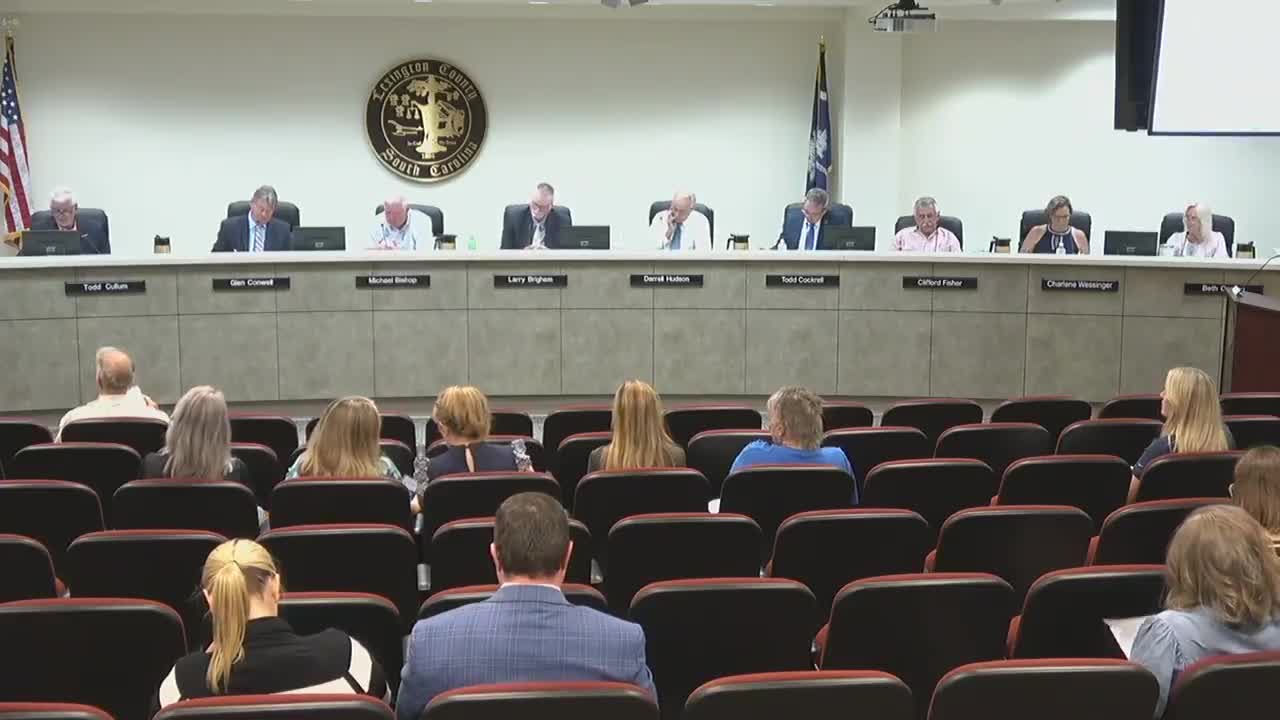
Summary
Council approved several zoning measures on third readings and advanced proposed land‑use changes on first reading, including controversial 'pending ordinance' provisions that drew opposition from two council members.
Lexington County Council on June 24 approved a series of zoning and land‑use measures while advancing other draft ordinances on first reading, with several members objecting to the use of pending‑ordinance provisions that would make measures effective before final readings.
The measures approved on third reading included a zoning map amendment (Ordinance 25‑02) and amendments to the county zoning ordinance addressing mining hours of operation (Ordinance 25‑04). Council also moved forward on first reading with Ordinance 25‑06, which would amend rules for “residential detached limited” (patio homes) to allow up to six dwelling units per acre and apply concurrency and special‑exception rules; and Ordinance 25‑11, establishing a central planning area for portions of the county. Both 25‑06 and 25‑11 were presented with a “pending ordinance” doctrine provision. Council took a first reading on Ordinance 25‑12, which defines open‑space standards for the Central Lexington County district.
Why it matters: the package changes how certain housing types and development intensities are treated in the county, and the pending‑ordinance language accelerates when some provisions would take effect — a point of contention among council members and potentially affecting near‑term permitting.
Councilwoman Wessinger moved the first‑reading measure for Ordinance 25‑06, outlining specific edits: patio homes (residential detached limited) limited to six units per acre; treated similarly to duplexes and townhomes in certain zoning and street classifications; concurrency to apply to residential detached limited; retention of special‑exception review; and a simple majority standard for the county Board of Zoning Appeals. Wessinger also cited an emergency basis for making the ordinance pending “because an influx of development in the county” — language invoking South Carolina Code procedure cited during debate.
Several council members said they supported the substance of the proposed changes but opposed the pending‑ordinance acceleration. Councilwoman Fisher and Councilman Bishop both voted “no” on the measures that included pending‑ordinance provisions; others voted in favor. On the 25‑06 vote the roll call shows Councilwoman Kerig, Councilwoman Wessinger, Councilman Cockrell, Councilman Hudson, Councilman Brigham, Vice Chair Conwell and Chairman Cullum voting yes; Councilwoman Fisher and Councilman Bishop voting no. On the 25‑11 vote the pattern was the same: Fisher and Bishop opposed; the remainder voted yes.
The zoning map amendment (Ordinance 25‑02) and the mining hours amendments (Ordinance 25‑04) passed on third and final reading with affirmative roll‑call votes. Ordinance 25‑12, amending the Lexington County Landscape and Open Space Ordinance to identify the Central Lexington County District and related open‑space standards, was taken on first reading and advanced.
Council discussion and procedure: several members noted the difference between supporting a measure’s content and opposing expedited (pending) enactment before full hearings and readings. Chairman Cullum and other supporters said progress on zoning items had taken months and that some expedited measures responded to recent development pressures. The record shows these were introduced during the regular agenda and voted on in open session after committee reports and public business.
Next steps: the ordinances taken on first reading will return for additional readings and required hearings; those with pending‑ordinance provisions will take effect sooner if final approvals and statutory conditions are met. The transcript does not record subsequent administrative steps or state approvals that may be required.