
Polk County hears presentations from five VoIP vendors as it reviews replacement for county phone system
Get AI-powered insights, summaries, and transcripts
Subscribe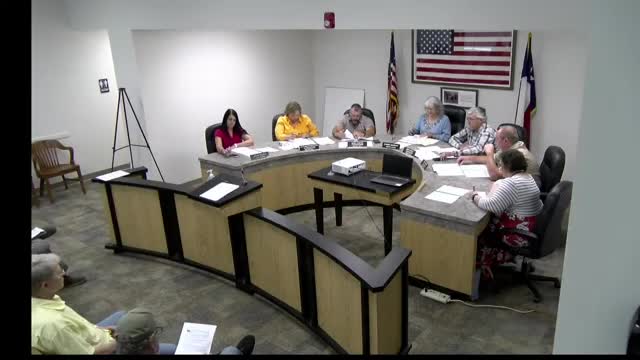
Summary
Polk County Commissioners heard hourlong presentations from five voice-over-IP vendors on July 17 as part of an evaluation of a replacement county telephone system; no vendor was selected at the meeting and staff will return with follow-up information.
Polk County Commissioners listened to demonstrations from five voice-over-IP (VoIP) vendors on July 17 as the court considers replacing the county's telephone system. The presentations covered service models, redundancy, local support and integration with the sheriff’s call-recording system; the court did not select a vendor at the meeting.
County staff convened the workshop to receive proposals and ask technical and operational questions so the court could decide how to proceed. The presentations ran about 10–15 minutes per vendor with time for questions.
The vendors emphasized different strengths. A representative identified in the record as Debbie, with Best in Network, told the court, “we have down home customer service,” and demonstrated a direct help number that routes to a tech desk. Evan Hough, identified in the transcript as owner and CEO of a Vesta/Fast Networks offering, said the company would centralize the county’s multiple voice carriers and claimed “we have a 100% uptime. 100, not 5 nines.”
Verge Network Solutions said it owns and operates its own infrastructure and can be on site from its Houston office in roughly 80 minutes; Art Ashcroft, Verge’s vice president and cofounder, said, “It took us 80 minutes to get here this morning.” Verge also presented a plan to integrate analog devices such as alarm and elevator phones and said it had designed for power-over-Ethernet gaps.
ESI, presented by K. H. Herron (regional sales manager) with partner Amy Doran of Archom Communications, emphasized its nationwide footprint, lifetime warranty and geo-redundant data centers. Herron said ESI provides “a lifetime warranty. Period.” He described server redundancy across Dallas, New Jersey and Las Vegas and a failover device that can route calls over cellular if the county’s internet blips.
Eastex Telephone, a locally based cooperative, emphasized rapid local on-site response and said it already serves 11 counties and maintains a physical office in Polk County; the representative said Eastex can provide both telephony and the network connectivity to route calls to its data centers and highlighted past disaster response after a 2020 tornado.
Presenters answered repeated questions about training, on-site response times, integration with the sheriff’s call-recording systems and options for call-recording retention. Vendors generally said they could integrate with the sheriff’s recording platform by mirroring network ports or via analog conversion and offered configurable retention (vendors described default retention windows such as 30–90 days with extensions available).
Commissioners asked about on‑site response times and training. Vendors gave varied answers depending on office location and staffing; Verge stated it had six technicians in Houston and could reach the county in about 80 minutes, and ESI and other vendors described 24/7 U.S.-based technical support plus options for on-site training during installation.
The court’s communications budget line was discussed in the budget workshop that followed the vendor presentations; county staff told the court that adopting a new hosted phone solution is expected to reduce certain communications costs in future budget years, but the court made no decision on switching vendors at the July 17 meeting. The court staff said the presentations were for information and that selection — if any — would be decided later after reference checks and follow-up questions.
No formal procurement action was taken at the meeting. The court said staff will follow up with references, verify contractual terms and report back with recommendations.
Ending: Commissioners thanked the companies for attending and said staff would continue evaluation and return with cost comparisons and integration details for a later meeting.