Get Full Government Meeting Transcripts, Videos, & Alerts Forever!
Get email alerts on the School Committee Goals topic
No spam. Unsubscribe anytime.
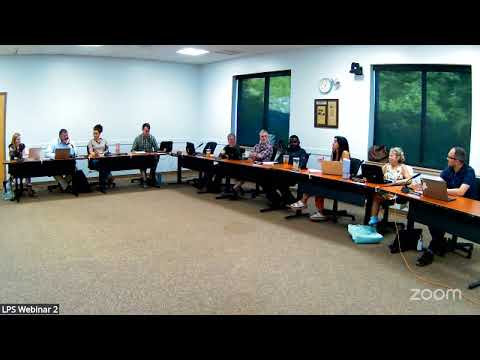
Lewiston School Committee opens broad discussion of draft goals, seeks clearer metrics and community input
Summary
At its June 30 meeting, the Lewiston School Committee reviewed a draft set of committee goals that members said should be tighter, measurable and designed to solicit staff and community feedback before final adoption.
LEWISTON, Maine — The Lewiston School Committee on Monday began a substantive review of draft committee goals intended to guide the district’s work over the coming year, with members urging clearer metrics, attention to staff workload and broader community engagement.
Superintendent Jake Langley introduced the item as a starting point for discussion, saying the document was “a draft just to get us started” and cautioning that “if we have so many goals, none of them become attainable.”
Committee members pressed for more specific measures and an implementation plan. Member Phoenix McLaughlin (Ward 1) praised the “great first crack” at a challenging task and urged a process for soliciting staff, parent and student feedback ahead of the next budget season. “I think we could just con consider this maybe as us, you know, penciling it in now,” McLaughlin said.
Members raised specific measurement questions. Some urged exploration of alternatives to statewide standardized tests as primary progress indicators, noting that students who do not test or who arrive midyear may not be captured by a single metric. Member McLaughlin said, “I would advocate for multiplying the methods,” recommending multiple types of assessment to reflect different learning styles.
Members also urged the committee to track staff retention and satisfaction as leading indicators of district performance. “A happy teacher is a better teacher,” said Member Donna Gallant (Ward 7), who asked that turnover and workforce measures be considered as part of the goals.
Committee members discussed keeping existing district efforts on credit recovery, alternative pathways and special-education supports but adding measurable targets and regular reporting. Superintendent Langley said many of those programs already exist and that the committee’s role would be to “measure and report out on what progress we’re making toward it.”
Members suggested publishing a public dashboard that would show agreed metrics on a regular schedule so the community can track progress. Language and layout changes were requested so the goals are easier to read and use; one member told staff the draft “needs to be graphically designed in a way that I can find my way.”
Public commenters reiterated similar themes. Luke Jensen, a former Lewiston fourth-grade teacher, called the draft “very vague” and urged greater emphasis on targeted assessments such as Fountas & Pinnell and “words their way” running records rather than only statewide tests.
Next steps: Langley said he would fold member feedback into a second draft, including more specific metrics, clearer ownership of tasks and options for soliciting community and staff input. The committee did not adopt the document on Monday.
Why it matters: The goals would guide district priorities, affect budgeting and shape how the district measures academic progress, staff support and student services.
What’s next: The committee asked staff to revise the draft, add measurable targets and propose a timeline and reporting cadence before the next round of budget deliberations.